
Lead platforms
Electrician Leads in 2026: Where They Come From and What They Cost per Job
No major platform publishes a fixed price for an electrician lead. Google Local Services Ads and Angi price by job type, location and demand; Networx quotes $14 to $100 per lead (checked 17 November 2026). The job decides the math: a Department of Energy lab study put the median home EV charger install at $1,098.
ByEdu López Parada· Founder, Made For BuildersReviewed
Where electrician leads come from in 2026
Electricians can buy leads per lead (Google Local Services Ads, Angi, Thumbtack, Networx), per call (eLocal), or build their own calls through a free Google Business Profile. Each source carries an electrical category, but they differ in what they check before showing you to homeowners and in how many electricians get the same request.
| Source | Pricing model | Published price | Checks before you get leads | Shared or exclusive |
|---|---|---|---|---|
| Google Local Services Ads | Pay per valid lead | Not published; varies by location, job type, lead type and bidding mode (Google) | Electrician is an "urgent category": extra screening with background checks; state license checks for select users (Google) | The customer contacts your business through your ad |
| Angi | Lead fee per lead | Not published; changes with task, location and demand (Angi) | See Angi leads cost | No more than five pros per request |
| Thumbtack | Pay per lead, price you set | Not published as a list; you set the lead price (Thumbtack) | Criminal background check for every account owner; the owner is responsible for local licensing (Thumbtack) | A customer can contact up to five pros in the first four hours (Thumbtack) |
| Networx | Prepaid leads | $14 to $100 per lead, all trades (Networx) | See Networx cost for contractors | Up to four professionals per buyer (Networx) |
| eLocal | Pay per call | Not published; you set the pricing, area and hours (eLocal) | Not stated on its electrician page | Live calls described as exclusive |
| Google Business Profile | Free listing | $0 (Google) | Profile verification | Your own profile and number |
| Partner Program | Commission on closed jobs only | $0 per lead or call. 20% of the labor on service and repair, 15% of the net on installations and replacements | A valid license and insurance are part of the agreement | One partner per trade per area |
Google Local Services Ads. Google charges "for each valid lead you receive through your Local Services ad", and prices move with "your location, the job type, the type of lead, or your bidding mode" (Google). A missed call counts too when "the customer stays on the line for more than 20 seconds" during business hours.
Pay per call. eLocal's electrician page says "you decide the service area where you want leads, the business hours when you're available to take calls, and even the pricing that fits your goals", and that a call that falls short of its criteria can be returned: "you can return it for credit" (eLocal). It does not publish a price.
Which electrical jobs leads bring, and what they are worth
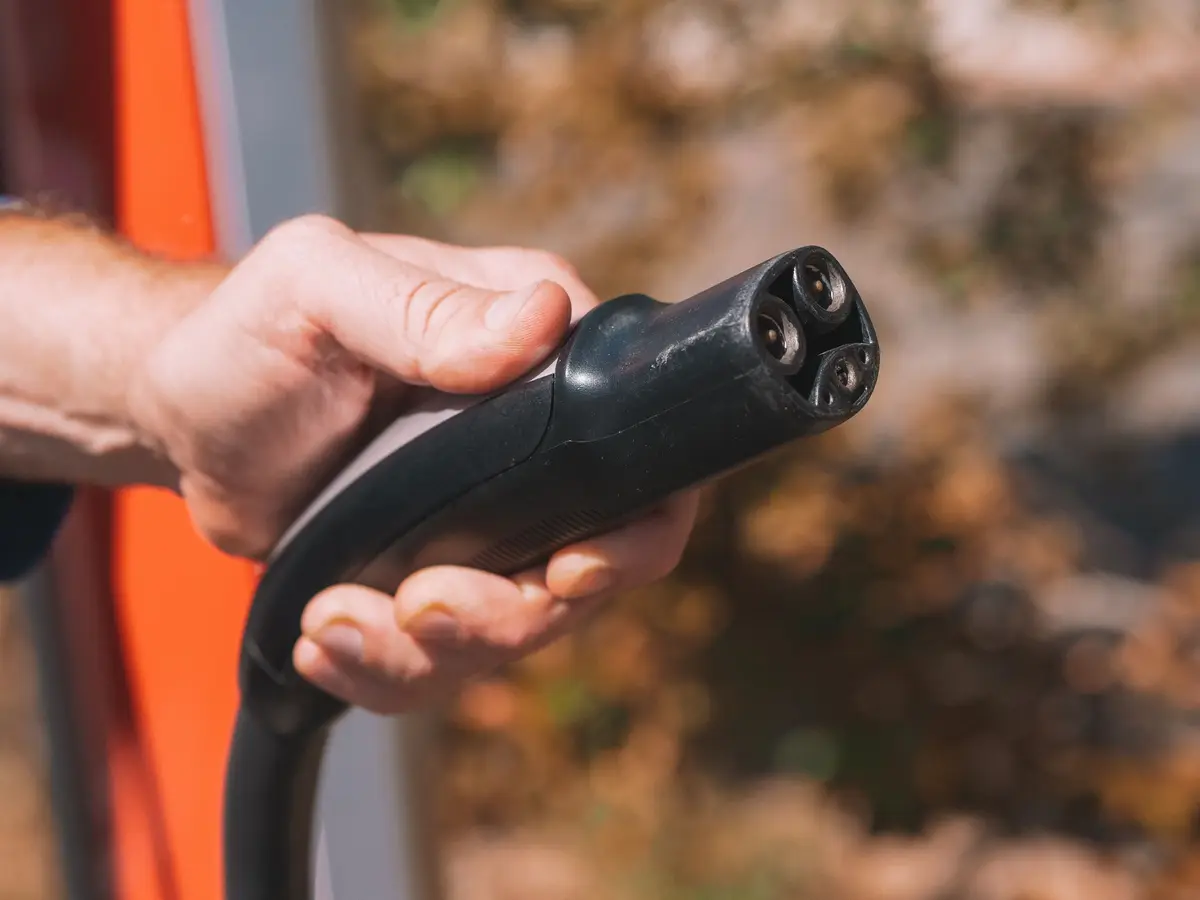
Electrical leads split into urgent repairs, which Google treats as time-sensitive, and planned work such as EV chargers, panel and service upgrades and rewiring. Published cost data exists for the planned work: a median $1,098 home charger install in a Department of Energy lab dataset, and federal rebate caps of $4,000 for a panel upgrade.
| Job type | Published figure (source) | What it means for a lead |
|---|---|---|
| Urgent repairs: exposed wiring, failures | No public ticket data. Google lists electrician as an urgent category for "exposed wiring and critical electronic failures" (Google) | Fast answer decides the job; small tickets make lead price weigh more |
| Level 2 EV charger install | Average $1,310, median $1,098 across 4,800+ residential installs, July 2018 to May 2022 (Idaho National Laboratory) | A planned, quoted job |
| Service upgrade with a charger | Rare, but added about $2,600 when needed (same INL report) | A larger ticket; worth asking about panel capacity on the first call |
| Electric panel (load service center) upgrade | Federal rebate of up to $4,000 per upgrade where a state runs the program (42 U.S.C. 18795a) | Rebate-funded demand depends on your state's program |
| Electric wiring | Federal rebate of up to $2,500 under the same program (42 U.S.C. 18795a) | Often paired with heat pump or appliance projects |
| Solar and other power generation hookups | BLS expects electricians to keep linking "solar and wind, to homes, businesses, and power grids" (BLS) | Often sold through installers |
The same INL report notes that "installation costs are greatly dependent upon local electrician rates" (INL), so a charger lead in your area may be worth more or less than the median.
EV chargers and panel upgrades: what changed in 2026
Two federal tax credits that paid homeowners for this work have ended: the home EV charger credit covers property placed in service up to June 30, 2026, and the efficiency credit that included 200-amp panels covers improvements made through December 31, 2025. Battery electric vehicle sales also fell to 6% of new vehicles in early 2026.
- Home EV charger credit (30C). The IRS: "For property you buy and place in service at your main home from January 1, 2023, to June 30, 2026, the credit equals 30% of the cost of the property", up to $1,000 per item (IRS). Chargers installed after that date do not get it.
- Panel upgrades in the efficiency credit (25C). Panelboards, sub-panelboards, branch circuits and feeders qualified "if they meet the National Electric Code and have a capacity of 200 amps or more", with a $600 limit per item. But "you can claim the credit for improvements made through December 31, 2025" (IRS).
- Rebates that remain in the statute. The High-Efficiency Electric Home Rebate allows "not more than $4,000 for an electric load service center upgrade" and "not more than $2,500 for electric wiring" (42 U.S.C. 18795a). States run these programs, so check your state energy office before quoting them to a customer.
- EV sales. The EIA reports that "battery electric vehicle sales fell to 6% of new vehicle sales in the first nine months of 2026, down from 8% over the same period in 2025", and that EVs were 2% of registered light-duty vehicles in 2024 (EIA).
Chargers still need an electrician when the home is short of capacity. The Department of Energy's fuel data center says "a qualified electrician can add circuits to accommodate the capacity needed for Level 2 charging", and that "appropriate permits may be required from the local building and permitting authorities" (AFDC). The INL study adds that "the addition of an electrical circuit requires a permit in most jurisdictions" (INL).
What an electrician lead costs per closed job
Cost per closed job is the lead price divided by your close rate. At Networx's published $14 to $100 per lead and an example close rate of 1 in 4, a closed job costs $56 to $400 in leads. Against the INL median charger install of $1,098, that is 5.1% to 36.4% of the job.
| Low lead price | High lead price | |
|---|---|---|
| Price per lead (Networx, published range) | $14 | $100 |
| Example close rate | 1 in 4 | 1 in 4 |
| Lead cost per closed job | $56 | $400 |
| Job value: median home charger install (INL) | $1,098 | $1,098 |
| Lead cost as a share of that job | 5.1% | 36.4% |
| Same lead cost on an example $300 repair | 18.7% | 133.3% |
The last row is why repair leads and install leads need separate math. Check what you keep per job with the job profit margin calculator, compare channels with the cost per lead calculator, then use the calculator below.
Electrician leads: cost per closed job
Put in what you pay per lead and how many close. Example numbers to start; change them to yours. Pick installation for charger and panel work.
Run your numbers
Paying per lead vs paying per job
Paying per lead versus paying a commission only when a job closes. Put in what you pay today and see both models side by side.
Example numbers. Change them to yours.
Labor plus any markup you add to parts. Parts at cost carry no commission.
Buying leads today
$200
per closed job
$1,000 a month for 5 closed jobs
Partner Program
$70
commission per closed job (20 % of labor)
$350 a month if the same 5 jobs came from brand calls
The difference
- Difference per job
- $130
- Difference a month
- $650
On these numbers, the commission would be $130 less per closed job than buying leads: $650 a month.
Hypothetical example using your numbers, for illustration only. Not a prediction or guarantee of calls, jobs or earnings: we don't guarantee any number of calls. Your results depend on your area, demand, prices and work.
License, permit and background checks platforms run
Google runs extra screening for electricians, including background checks, and checks business and owner licenses on the state level for select users; it takes 3 to 4 weeks on average. Thumbtack requires a criminal background check for account owners and leaves local licensing to them. Permits stay your responsibility on every platform.
- Google. "The electrician category is considered an urgent category because consumers often call electricians for time-sensitive, urgent needs, such as exposed wiring and critical electronic failures." For this reason "electricians undergo an additional level of screening, which includes service professional background checks". The license line reads "Owner license on state level* (Select users only)", and the process "takes 3–4 weeks to complete after submitting your documents" (Google).
- Thumbtack. "All account owners must take and pass a criminal background check through a nationally accredited third-party provider when they create a Thumbtack account." The owner answers for "local licensing requirements" (Thumbtack).
- Your state. The BLS: "Most states require electricians to be licensed" (BLS). State guides: electrical license by state, Texas, Florida and North Carolina.
Permits are part of the quote
A lead platform screens the business, not the job. For charger and panel work, the permit and any site plan the local authority asks for are yours to price in (AFDC).
Seasonality: when electrician demand moves
No public source publishes month-by-month demand for residential electrical work. Two published signals help: the US Fire Administration found residential electrical fires peak in January (12%), and the BLS notes electrician schedules vary with inclement weather. Deadlines move demand too, as the June 30, 2026 end of the charger credit did.
- Winter. "Residential building electrical fires occurred most often in the winter month of January (12%)" (USFA). Safety calls and urgent repairs are the leads where the first electrician to answer gets the job.
- Weather. Electrician "work schedules may include evenings and weekends and may vary during times of inclement weather" (BLS).
- Incentive deadlines. Watch your state's rebate program dates as well as the federal ones above, and compare your own call log month by month before fixing a monthly lead budget.
Getting electrician calls without paying per lead
Your own calls come from a complete Google Business Profile, reviews, repeat customers and your own ads. Or a partner brand in your ZIP codes that charges only when a job closes. The plumbing and HVAC versions of this question are covered on their own pages.
- Google Business Profile. Google describes "a free Google Business Profile" that helps a service area "appear on Google Search and Google Maps" (Google). It is also required for Local Services Ads.
- Your own marketing. Channels, budgets and agencies for electricians: electrician marketing and electrical advertising.
- Other trades. For the plumbing and HVAC versions: plumbing leads, HVAC leads, and across trades contractor leads.
- A partner brand. In the Partner Program we build and run a local electrical brand for your ZIP codes, and the calls ring through to you. One partner per trade per area. No setup fee, no monthly fee and no pay-per-lead: 20% of the labor on service and repair jobs and 15% of the net on installations and replacements, only on jobs you close. How commission works.
Made For Builders is not an electrical contractor and does not perform, supervise or guarantee electrical work. We have no US results yet and do not promise a number of calls.
Partners keep the calls from their own area. Commission only on closed jobs: see the rates.
Electrician leads: frequently asked questions
How do I get electrical leads?
Pay per lead (Google Local Services Ads, Angi, Thumbtack, Networx), pay per call (eLocal), or build your own calls through your Google Business Profile, reviews, repeat customers and referrals.
How much do electrician leads cost?
Google, Angi and Thumbtack publish no fixed price. Networx publishes $14 to $100 per lead across trades (checked 17 November 2026). The figure that matters is your lead spend divided by the jobs it closed.
Are there free electrical leads?
A Google Business Profile costs nothing, and reviews and referrals cost time rather than a fee. A partner brand that charges commission only on closed jobs has no upfront cost either: see the Partner Program.
Are electrician leads exclusive?
On Angi a request goes to no more than five pros, and Networx matches up to four. On Local Services Ads the customer contacts your business through your ad. eLocal describes its live calls as exclusive.
Do lead platforms check my electrical license?
Google checks business and owner licenses on the state level for select electrician advertisers and runs background checks. Thumbtack runs a background check on the account owner and makes you responsible for local licensing.
Is EV charger work still growing in 2026?
The federal home charger credit ended for property placed in service after June 30, 2026, and battery electric vehicles fell to 6% of new vehicle sales in the first nine months of 2026, per the EIA. Homes short of capacity still need an electrician to add circuits.
Sources and method
Every figure and quote on this page was read on the source's own page on 17 November 2026 and saved with a capture. Where a source publishes no price, we say so. The close rate and the $300 repair are labeled examples. We do not rate platforms. Reviewed every six months.
Sources
- Google Local Services Ads Help: Business screening and verification requirements (United States) (opens in a new tab)Accessed
- Google Local Services Ads Help: How leads work (opens in a new tab)Accessed
- Google Ads Help: Benefits of using a Business Profile (opens in a new tab)Accessed
- Angi Help Center: Opportunities and Leads FAQ (opens in a new tab)Accessed
- Thumbtack Help: Pay for leads (opens in a new tab)Accessed
- Thumbtack Help: Background checks (opens in a new tab)Accessed
- Thumbtack Help: Quality commitment (opens in a new tab)Accessed
- Networx: Networx leads (opens in a new tab)Accessed
- Networx: Contractor leads (opens in a new tab)Accessed
- eLocal: Electrician leads (opens in a new tab)Accessed
- BLS Occupational Outlook Handbook: Electricians (opens in a new tab)Accessed
- Idaho National Laboratory: Breakdown of Electric Vehicle Supply Equipment Installation Costs (INL/RPT-22-68598, August 2022) (opens in a new tab)Accessed
- Alternative Fuels Data Center (DOE): Charging Electric Vehicles at Home (opens in a new tab)Accessed
- IRS: Alternative Fuel Vehicle Refueling Property Credit (opens in a new tab)Accessed
- IRS: Energy Efficient Home Improvement Credit (opens in a new tab)Accessed
- 42 U.S.C. 18795a: High-efficiency electric home rebate program (Cornell LII) (opens in a new tab)Accessed
- EIA Today in Energy: hybrid and battery electric vehicle sales, 3Q 2026 (opens in a new tab)Accessed
- US Fire Administration: Residential Building Electrical Fires (2014-2016) (opens in a new tab)Accessed
Next steps
Where to go from here
Your trade
How the Partner Program works for your trade: the jobs, the licensing check and how commission is paid.
See your tradeRun your numbers
A free calculator to check the margin on a job before you price it.
Open the calculatorLead platforms
What each lead source charges, what it includes and the alternatives, from published terms.
All lead platform guidesHow the Partner Program works
We build and run a local brand for your trade in your area. The calls ring on your phone and you pay commission only on jobs you close.
See the Partner ProgramApply to the Partner Program
Calls from your own area under a local brand. Commission only on closed jobs.
Apply
Last reviewed: