
Licensing
EPA License for HVAC (2026): Section 608 Technician Certification
The EPA does not issue an HVAC license. It requires Section 608 certification for technicians who could release refrigerant while servicing or disposing of equipment. You pass an EPA-approved test for Type I, II, III or Universal, scoring 70 percent on closed-book tests, and the credential does not expire (EPA and 40 CFR part 82, checked November 10, 2026).
Summary of EPA pages and federal regulations for orientation, not legal advice. The EPA and your state regulator have the final word.
ByEdu López Parada· Founder, Made For BuildersReviewed
Summary
EPA 608 certification types at a glance
The EPA has four Section 608 certification types, and each test is specific to the type of equipment you plan to work on. Type I covers small appliances, Type II high-pressure equipment, Type III low-pressure equipment, and Universal covers all of them. Each type has its own test format and passing score.
| Type | What it covers | Examples in the regulation | Test format | Questions and passing score |
|---|---|---|---|---|
| Type I | Servicing small appliances | Appliances factory-sealed with 5 pounds or less of refrigerant (40 CFR 82.152) | On-site, or mail-in if the program offers Type I only | 25 core and 25 Type I questions; 70 percent closed-book, 84 percent mail-in |
| Type II | Servicing or disposing of medium-, high- or very high-pressure appliances, except small appliances and vehicle air conditioners | High-pressure examples include R-22, R-407A, R-407C, R-410A and R-502 | Closed-book, proctored | 25 core and 25 Type II questions; 70 percent |
| Type III | Servicing or disposing of low-pressure appliances | Examples include R-11, R-123, R-113 and R-245fa | Closed-book, proctored | 25 core and 25 Type III questions; 70 percent |
| Universal | Servicing all types of equipment | All of the above | Closed-book, proctored; a mail-in Type I test does not count | 25 core and 75 sector questions, or passed Type I, II and III tests combined; 70 percent |
Who needs it
Who needs an EPA 608 certification?
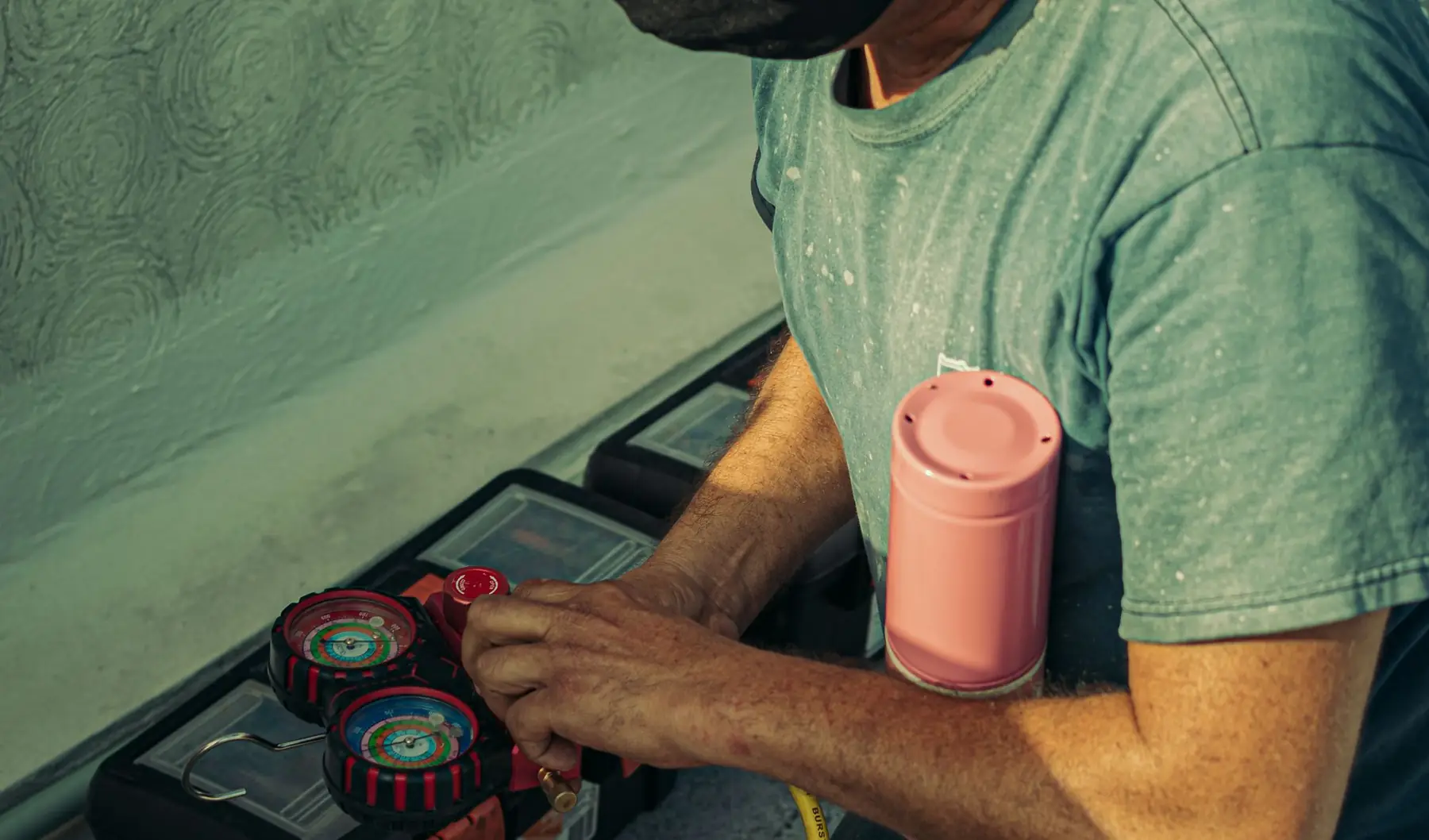
Anyone the regulation calls a technician: a person who attaches hoses and gauges to measure pressure, adds or removes refrigerant, or could otherwise be expected to violate the integrity of the refrigerant circuit. The EPA says that can include installers, contractor employees, in-house service personnel and owners or operators of appliances. Apprentices are exempt only under close supervision.
Section 608 of the Clean Air Act establishes the National Recycling and Emission Reduction Program. EPA regulations under it say that technicians who maintain, service, repair, or dispose of equipment that could release refrigerants into the atmosphere must be certified. The EPA's definition of a technician includes attaching and detaching hoses and gauges to and from an appliance to measure pressure, and adding refrigerant to or removing refrigerant from an appliance. Since January 1, 2018, the rule has applied to equipment with ozone-depleting refrigerants and to equipment with non-exempt substitute refrigerants, such as HFCs.
- Apprentices: exempt provided they are closely and continually supervised by a certified technician (40 CFR 82.161).
- Disposal only: people who dispose of small appliances, vehicle air conditioners and similar appliances do not need to be certified.
- Vehicle air conditioning: that is a separate program, Section 609. A Section 609 card does not let you buy refrigerant for stationary equipment.
- Venting: Section 608 prohibits intentionally venting ozone-depleting refrigerants and their substitutes, such as HFCs, while you maintain, service, repair or dispose of equipment.
608 is personal, not a business license
Section 608 certifies the technician. It does not let you contract HVAC work in your own name; that comes from the state. Florida, for example, says a person must be certified or registered to engage in the business of contracting. See HVAC license by state and HVAC contractor license: business vs personal.
Steps
How to get EPA 608 certified
Pick the certification type that matches your equipment, then book the test with a program on the EPA's list of approved certifying organizations. Type II, Type III and Universal tests are closed-book and proctored, and proctors check photo identification. The program must send results and a wallet card within 30 days of the test.
1. Choose the type
Match the type to the equipment you will service: Type I for small appliances, Type II for high-pressure systems such as those using R-410A, Type III for low-pressure appliances, or Universal for all of them. You can earn Universal at once or by combining passing scores on separate Type I, Type II and Type III tests.
2. Pick an EPA-approved program
The EPA publishes a list of programs approved to provide the Section 608 test. Some programs offer remote or online testing, and Type I programs that offer a mail-in option are marked. Programs marked with an asterisk are intended specifically for their own employees. The EPA does not review or approve any training or test-prep materials. Credentials issued by programs that have since stopped testing remain valid. Programs are encouraged to offer tests in other languages or with a translator, and you can request an oral test in writing at least 30 days before the exam date.
3. Take the test
Each Type I, II or III test has 25 core questions and 25 questions for that type; the Universal test has 25 core and 75 sector questions. Proctors verify your identity by examining photo identification. A core test taken open-book cannot be used toward Universal, and neither can a mail-in Type I test. The passing score is 70 percent on closed-book tests and 84 percent on mail-in Type I tests.
4. Results, card and records
The program must give you your results no later than 30 days from the test and issue a wallet-sized identification card within the same period. The EPA itself does not issue cards. Keep a copy of your certificate at your place of business, and keep it until three years after you stop working as a technician (40 CFR 82.161). Breaking the subpart F rules may result in revocation or suspension of the certificate, and the EPA reserves the right to require recertification at some future date.
What the test costs
The regulation says certifying programs may charge individuals reasonable fees for the administration of the tests. The EPA does not set or publish a price, so we do not quote one. Compare prices on the program's own website before you book.

Buying refrigerant
Buying refrigerant with an EPA 608 card
Only EPA-certified technicians may buy refrigerant, with limited exceptions, and only for the equipment their certification covers. For stationary air conditioning and refrigeration, that means a Section 608 certification. An employer can buy if it gives the wholesaler written evidence that it employs at least one certified technician.
- Match your type: individuals may only purchase refrigerant consistent with the appliances covered by their certification.
- Stationary vs vehicle: only Section 608 certified technicians can purchase refrigerant for stationary refrigeration and air-conditioning equipment. Section 609 technicians cannot, regardless of container size.
- Employers: a company can buy if it provides the wholesaler with written evidence that it employs at least one properly certified technician.
- Equipment is not covered: the sales restriction does not cover equipment or components that already contain refrigerant.
- Wholesaler records: sellers must keep invoices with the purchaser's name, the date of sale and the quantity of refrigerant.
AIM Act
The AIM Act transition in 2025 and 2026
Separately from Section 608, the EPA's Technology Transitions Program under the AIM Act restricts HFCs by global warming potential (GWP) in new equipment. Restrictions began on January 1, 2025. A May 2026 rule removed the January 1, 2026 installation date for residential and light commercial equipment above the 700 limit made or imported before 2025.
- From January 1, 2025: manufacturers and importers of certain products and equipment that use HFCs must comply with restrictions on certain HFCs or HFC blends. The manufacture, distribution, sale, installation, import and export of products containing restricted HFCs are prohibited. Deadlines vary by sector and subsector.
- December 2023 rule (residential and light commercial air conditioning and heat pumps): allowed inventory of higher-GWP equipment manufactured or imported before January 1, 2025 to be installed until January 1, 2026.
- May 2026 rule (reconsideration, covering residential and light commercial air conditioning and heat pump systems among others): removes that January 1, 2026 installation date for equipment using refrigerants above the 700 limit that was made or imported before January 1, 2025, and allows pre-2025 inventory of air conditioning systems to be installed until supply runs out.
- December 2024 rule (variable refrigerant flow air conditioning): higher-GWP equipment manufactured or imported before January 1, 2026 may be installed until January 1, 2027.
None of this changes who needs a 608 card: the certification requirement covers both ozone-depleting refrigerants and non-exempt substitutes. Check the EPA's Technology Transitions pages before you quote a replacement on older equipment: the dates above come from three separate rules issued in December 2023, December 2024 and May 2026.
State by state
State licenses on top of EPA 608
The states below license HVAC contracting under their own laws, and the 608 card does not replace that license. Some states fold the EPA credential into their own requirements: Georgia's conditioned air rule lists evidence of EPA certification as part of the experience for its contractor licenses.
- Florida: a person must be certified or registered to engage in the business of contracting. The statute exempts selling, servicing or installing ductless plug-in units of no more than 3 tons or 36,000 Btu. Details in Florida HVAC license and the Florida licensing summary.
- Texas: contractors who install, repair or maintain air conditioning, refrigeration or heating systems must have a TDLR license. Texas licensing summary.
- Georgia: the conditioned air rule asks for evidence of an EPA certification as part of the documented experience. Georgia licensing summary.
- North Carolina: the heating contractor exams require 2 years (4,000 hours) of on-site full-time experience. North Carolina licensing summary.
- Arizona and the rest: see Arizona, the markets overview and HVAC license by state.
First jobs
After the certification: getting your first HVAC jobs
A 608 card lets you handle refrigerant; it does not bring customers. Technicians who plan to work for themselves still need a state contractor license where the state requires one, and a way to win jobs. Price each job so the margin covers the time spent winning it, and track each channel by cost per closed job.
- Opening the company: how to start an HVAC business.
- Compare how lead platforms charge HVAC businesses: HVAC leads.
- Set your prices with the HVAC pricing guide and check margins with the job profit margin calculator.
- See what we look for in HVAC partners on the HVAC contractors page.
The BLS notes that HVAC workers may need a license or certification, and that technicians must follow regulations regarding the conservation, recovery, and recycling of refrigerants. It reports a median annual wage of $61,010 for HVAC mechanics and installers in May 2025; that is an employee wage, not business income.
Licensed and ready for work?
Through the Partner Program, we build a local brand for your area and pass its calls to you. The commission is 20% of the labor on service and repair jobs, and 15% of the net on installations and replacements, with no setup fee and no monthly minimum: how commission works. We check your license before your brand goes live. Made For Builders is not a contractor: you do the work under your own license and insurance.
FAQ
EPA 608 certification: questions
How much does EPA certification cost?
The EPA does not set a price. Under 40 CFR part 82, certifying programs may charge individuals reasonable fees for administering the tests, and each program publishes its own. Check the price with a program on the EPA's approved list before you book.
How can I check my EPA test results online?
Ask the program that gave the test. It must tell you your results no later than 30 days from the test. Since January 1, 2018, programs, excluding federally run ones, must also publish online a list of technicians they certified on or after January 1, 2017, unless the technician opts out.
What is an EPA refrigeration certification?
It is the Section 608 technician certification, required under the Clean Air Act for technicians who maintain, service, repair or dispose of equipment that could release refrigerants. It comes in four types: Type I, Type II, Type III and Universal, and it does not expire.
What's the fastest you can get your HVAC license?
The 608 card is the quick part: one test, with results and a card due within 30 days. A state contractor license takes longer. Florida's main route asks for 4 years of experience with at least 1 as a foreman, and North Carolina asks for 2 years (4,000 hours).
What if I lose my EPA 608 card?
The EPA cannot replace it. Contact the organization that certified you, which must keep records of the cards it issues. If it has closed and you have no documentation, you will need to retake the Section 608 test.
Sources
Sources
Sources
- US EPA: Stationary Refrigeration and Air Conditioning (Section 608) (opens in a new tab)Accessed
- US EPA: Section 608 Technician Certification Requirements (opens in a new tab)Accessed
- US EPA: Section 608 Technician Certification (opens in a new tab)Accessed
- US EPA: Certification Programs for Section 608 Technicians (opens in a new tab)Accessed
- US EPA: Steps for Replacing a Lost Section 608 Technician Certification Card (opens in a new tab)Accessed
- US EPA: Refrigerant Sales Restriction (opens in a new tab)Accessed
- eCFR: 40 CFR 82.161 (technician certification) (opens in a new tab)Accessed
- eCFR: 40 CFR 82.152 (definitions) (opens in a new tab)Accessed
- eCFR: 40 CFR part 82, subpart F, including Appendix D (certification program standards) (opens in a new tab)Accessed
- US EPA: Technology Transitions Program (AIM Act) (opens in a new tab)Accessed
- US EPA: Regulatory Actions for Technology Transitions (opens in a new tab)Accessed
- US EPA: Technology Transitions reconsideration final rule fact sheet (May 2026, PDF) (opens in a new tab)Accessed
- Florida Statutes s. 489.103 (exemptions) (opens in a new tab)Accessed
- Florida Statutes s. 489.113 (qualifications for practice) (opens in a new tab)Accessed
- TDLR: Air Conditioning and Refrigeration Contractors (opens in a new tab)Accessed
- Ga. Comp. R. & Regs. r. 121-3-.04 (secondary source: Cornell LII copy of the official rule) (opens in a new tab)Accessed
- NC Plumbing, Heating and Fire Sprinkler board: Applicant Information (opens in a new tab)Accessed
- BLS Occupational Outlook Handbook: Heating, Air Conditioning, and Refrigeration Mechanics and Installers (opens in a new tab)Accessed
Next steps
Where to go from here
Your trade
How the Partner Program works for your trade: the jobs, the licensing check and how commission is paid.
See your tradeRun your numbers
A free calculator to check the margin on a job before you price it.
Open the calculatorHow the Partner Program works
We build and run a local brand for your trade in your area. The calls ring on your phone and you pay commission only on jobs you close.
See the Partner ProgramApply to the Partner Program
Calls from your own area under a local brand. Commission only on closed jobs.
Apply
Last reviewed: