Business Texting & SMS for Home Services

Text messages are opened at rates email and voicemail cannot approach, and for home-service businesses that turns texting into one of the highest-converting tools available — for missed-call text-back, lead response, scheduling, and review requests. But SMS is also the most heavily regulated channel a small business can touch. Under the federal Telephone Consumer Protection Act (TCPA), marketing texts generally require prior express written consent, and getting consent and opt-out handling wrong is genuinely expensive. This guide covers the conversion case for two-way texting and the compliance rules in plain, accurate terms.
When a homeowner needs a contractor, the decision often comes down to who responds first and most clearly. Phone calls go unanswered. Emails sit unread for hours. But a text message is almost always seen — usually within minutes. That single behavioral fact makes SMS one of the most powerful conversion tools a US home-service business has, and one of the most underused.
It is also the most regulated. The federal Telephone Consumer Protection Act (TCPA) governs how businesses may text consumers, and the penalties for getting it wrong are real. This guide does two things: it makes the conversion case for two-way business texting, and it lays out the compliance rules in accurate, plain language so you can use the channel without stepping on a landmine.
Note: this article is educational, not legal advice. TCPA rules, FCC orders, and state laws change, and enforcement evolves. Confirm current requirements with the FCC and qualified counsel before launching a texting program.
Why Texting Converts: The Open-Rate Reality
The conversion power of SMS comes down to attention. Across industry analyses summarized by platforms like Twilio, text messages are opened at rates in the high-90% range and are typically read within minutes of arrival. Email open rates sit far lower, and a large share of marketing emails are never opened at all.
For home services, where the customer is often mid-emergency or comparing two or three businesses at once, that speed-to-attention is decisive.
| Channel | Typical open / answer behavior | Best use for home services |
|---|---|---|
| SMS | Opened in the high-90% range, usually within minutes | Missed-call follow-up, reminders, review requests, scheduling |
| Phone | Many calls go unanswered, especially after hours | Live emergency intake, complex quotes |
| Much lower open rates, slower to be read | Detailed estimates, receipts, longer-form follow-up | |
| Voicemail | Frequently ignored or never heard | Rarely effective alone |
Sources: industry open-rate analyses summarized by Twilio; contact-decay research from Harvard Business Review.
The takeaway is not "stop calling." It is that a short, time-sensitive message belongs in a text, because that is where it will actually be seen. This connects directly to the conversion services overview and the broader case for fast, frictionless response in the 5-minute rule.
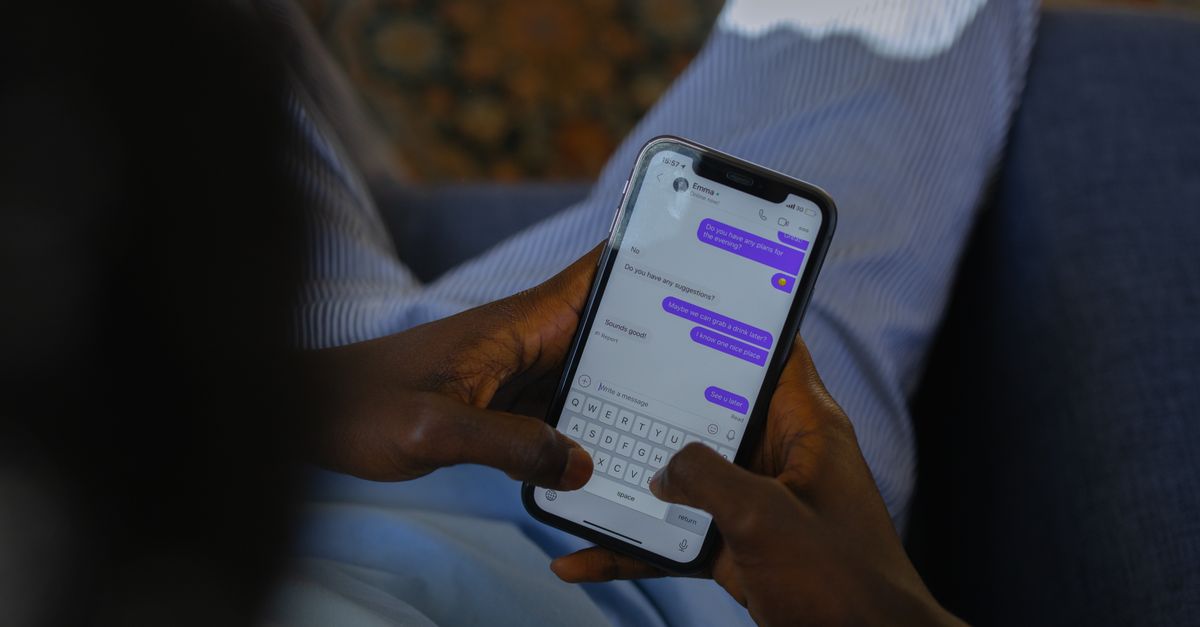
Missed-Call Text-Back: The Highest-ROI Automation in the Trades
Of every texting tactic, missed-call text-back is the one that pays for itself fastest. The mechanic is simple: when a call comes in that nobody answers, the system immediately sends an SMS to that number.
"Sorry we missed you — this is [Company]. We can help today. Reply here or call us back at [number]."
The reason it matters so much is structural. In home services, a missed call is frequently a lost job, because the caller simply dials the next business on the list. The real cost of missed calls for contractors lays out the revenue math; the Harvard Business Review research on lead response explains why even a few minutes of delay collapses contact probability.
Where Missed-Call Text-Back Earns Its Keep
- After hours. Emergency trades get calls at night and on weekends. An instant text keeps the lead warm until a human can respond.
- During active jobs. A two-truck operation cannot always answer mid-install. The text bridges the gap.
- Peak season. When call volume spikes, automation prevents leads from leaking out the bottom.
It pairs naturally with an AI phone receptionist for contractors: the AI answers what it can, and text-back catches the rest. Compare staffing approaches in the AI receptionist vs call center comparison.
Two-Way Texting Across the Customer Journey
Texting is not only for missed calls. A two-way business-texting thread can carry the customer through the entire journey, each touch landing where it is most likely to be seen.
The Journey, Mapped to Texts
- Lead response. A new web or ad lead gets an immediate text acknowledging the request and offering a booking window — fast, before a competitor responds.
- Appointment confirmation and reminders. Confirmations and day-before reminders cut no-shows. These are typically transactional messages the customer expects.
- On-the-way / arrival window. "Your technician is 20 minutes out" reduces anxiety and missed visits.
- Post-job review request. A direct, texted Google review link sent right after the job — the highest-converting review moment, as covered in the science of online reviews and Google reviews for home-service businesses.
- Follow-up and reactivation. Seasonal reminders and win-back, tied into the broader aftercare and repeat-revenue engine.
This is where texting compounds with lead follow-up systems and your CRM or field-service software: every stage becomes a logged, two-way thread instead of a missed voicemail.

TCPA Compliance: The Rules You Cannot Skip
Texting power comes with texting law. The Telephone Consumer Protection Act, enforced by the FCC, governs how businesses may send calls and texts to consumers. The core concepts every home-service business must understand:
Consent
- Marketing texts sent with an automated system generally require prior express written consent — a clear, affirmative agreement from the recipient to receive marketing messages at that number.
- Transactional / informational messages a customer reasonably expects (such as an appointment confirmation after they booked) sit on different footing, but the conservative, defensible practice is to obtain and document consent for any texting program.
- Consent must be documented. "They gave us their number" is not the same as consent to send marketing texts.
A note on the regulatory landscape: the FCC has at times proposed stricter "one-to-one" consent requirements for lead-generation texting. A version of that rule was vacated by the Eleventh Circuit Court of Appeals in early 2025, leaving the longstanding "prior express written consent" framework in place. The practical lesson is that the rules move — so build your program on clear, documented, per-business consent and verify the current state of the law before you launch.
Opt-Out
- Honor opt-out keywords — STOP, UNSUBSCRIBE, CANCEL, QUIT — and reasonable variations.
- Stop messaging the number promptly and confirm the opt-out once.
- Maintain a suppression list so an opted-out number is never messaged again, across all campaigns.
Other Guardrails
- Respect quiet hours and avoid messaging at inappropriate times.
- Identify your business clearly in messages.
- Remember that state laws can be stricter than federal law (Florida and others have their own mini-TCPA statutes with their own consent rules).
| Message type | Consent posture | Examples |
|---|---|---|
| Transactional / expected | Customer-initiated or expected after booking | Appointment confirmation, "on the way" text, invoice receipt |
| Conversational reply | Customer texted you first | Answering an inbound question |
| Marketing / promotional | Prior express written consent (documented) | Seasonal offers, win-back promotions, review-program blasts |
This is exactly why texting from a compliant platform rather than a personal cell phone matters: reputable providers automate keyword opt-outs, maintain suppression lists, and log consent — the record-keeping that protects you if a question ever arises.
Choosing How to Send: Platforms and Setup
Most home-service businesses get business texting one of two ways: a dedicated texting feature inside their field-service software, or a standalone business-texting/automation platform.
What to Require From Any Solution
- A dedicated business number (not a personal line), often with the ability to text-enable your existing landline.
- Two-way threads visible to the whole team, not trapped on one person's phone.
- Consent and opt-out tracking with automatic suppression.
- Missed-call text-back and scheduled reminders.
- Review-request automation with a direct link.
- Carrier registration support (10DLC) so your messages are deliverable and compliant with carrier rules.
| Approach | Best for | Trade-off |
|---|---|---|
| Field-service software texting | Teams already using a platform for scheduling/CRM | Texting features vary by vendor and tier |
| Standalone texting/automation platform | Businesses wanting deep automation and missed-call text-back | Another tool to integrate |
| Personal cell phone | Almost no one | No consent logging, no automation, no compliance trail |
For the full software landscape, see the field-service platform comparison, the CRM guide, and the operations services overview.

Why 10DLC Registration Matters
If you have heard of messages "not delivering" from a new business number, the cause is usually carrier filtering. US carriers require business senders using standard 10-digit long codes to register their brand and campaigns through the 10DLC framework. Registration confirms who you are and what you send, and it is what keeps your texts out of the spam filter. Reputable platforms walk you through it. Skipping it does not just risk compliance — it quietly tanks deliverability, so your perfectly good messages never arrive. Treat 10DLC registration as a launch requirement, not an afterthought, the same way you would treat licensing in any trade-specific guide.
Putting It Together: A 30-Day Texting Rollout
Week 1: Foundation and Compliance
- Choose a compliant platform with a dedicated business number and opt-out automation.
- Draft your consent language and add a clear opt-in wherever you collect numbers (web forms, booking, intake).
- Complete carrier registration (10DLC) so messages deliver reliably.
Week 2: Conversion Basics
- Turn on missed-call text-back first — it is the fastest win.
- Set up appointment confirmation and day-before reminder texts.
- Write a fast lead-response template for new inquiries.
Week 3: Reviews and Aftercare
- Automate a post-job review request with a direct link.
- Add a 30-day check-in and seasonal reminder, tied to your aftercare engine.
Week 4: Measure and Refine
- Track answer-plus-text-back recovery rate, review completion, and no-show reduction.
- Confirm every opt-out is being honored and suppressed.
For trade-specific context, the plumbers guide, electricians guide, and industries overview show how texting slots into each trade's funnel. Definitions for the acronyms here live in the glossary.
Writing Texts That Convert (Without Annoying People)
Compliance keeps you legal; craft keeps you effective. A few principles separate texts that get replies from texts that get opt-outs.
- Identify yourself immediately. Lead with the business name. An anonymous text reads as spam and gets ignored or reported.
- Keep it short and single-purpose. One message, one ask. Long paragraphs do not belong in SMS.
- Make the next step trivial. A direct link, a yes/no question, or a tappable callback number — never "visit our website and navigate to."
- Mirror the customer's urgency, not yours. An emergency lead wants speed; a past customer on a seasonal reminder wants helpfulness, not pressure.
- Respect cadence. A handful of well-timed, relevant messages across a relationship beats frequent promotional blasts that train people to opt out.
| Message | Weak version | Strong version |
|---|---|---|
| Missed call | "Call us back." | "Sorry we missed you — this is [Company]. We can help today. Reply or call [number]." |
| Review request | "Please review us." | "Glad we got that fixed! A quick Google review would mean a lot: [direct link]." |
| Reminder | "Appointment tomorrow." | "[Company] reminder: your visit is tomorrow 8-10am. Reply C to confirm or R to reschedule." |
The mechanics matter because texting's advantage is that it feels personal. The moment it reads like a mass marketing blast, the open-rate advantage works against you. Pair this craft with the conversion services overview and the lead follow-up guide.
The Mistakes That Turn Texting Into Liability
- Texting marketing messages without documented consent. The single most expensive error. Get and record consent.
- Ignoring or mishandling opt-outs. STOP must mean stop, promptly, every time, across campaigns.
- Using a personal phone. No logging, no automation, no compliance trail.
- Assuming federal rules are the whole story. State mini-TCPA statutes can be stricter; check the states you operate in.
- Over-messaging. High open rates cut both ways — relentless texting earns opt-outs and complaints fast.
- Treating SMS as a megaphone. Texting converts because it is personal and timely. Blasting it like email destroys the advantage.
Business texting is, for most US home-service companies, the highest-leverage conversion tool they are not yet using well. It gets the right message in front of the customer at the moment of decision, recovers missed calls before they become lost jobs, and carries the relationship through to the review and the next booking. The constraint is not technical — it is compliance. Build the program on documented consent, instant opt-out handling, and a real platform, and texting becomes a durable advantage rather than a legal risk.
Start with missed-call text-back this week. It is the fastest payback in the trades, and it is also the cleanest place to prove that fast, well-handled SMS turns more of your existing demand into booked work.
We answer before we start
Q/01Do I need consent to text my customers under the TCPA?
It depends on the message. Under the Telephone Consumer Protection Act, marketing or promotional texts sent with an automated system generally require prior express written consent — a clear, affirmative agreement from the recipient to receive marketing texts at that number. Purely transactional or informational messages a customer reasonably expects (for example, an appointment confirmation after they booked) sit on different footing, but the safest practice is to obtain and document consent for any texting program and to honor opt-outs immediately. Rules and enforcement evolve, and state laws can be stricter than federal law, so confirm current requirements with the FCC and qualified counsel before launching.
Q/02Are text messages really opened more than emails?
Yes. Across multiple industry analyses, SMS open rates are reported in the high-90% range and are typically read within minutes, while email open rates sit far lower and many messages are never opened at all. The practical implication for home services is large: a texted appointment reminder, missed-call follow-up, or review request is far more likely to be seen and acted on than the same message sent by email. Texting is not a replacement for email or phone — it is the fastest way to get a short, time-sensitive message in front of a customer who is mid-decision.
Sources & resourcesQ/03What is missed-call text-back and why does it matter?
Missed-call text-back automatically sends an SMS to anyone whose call you could not answer: 'Sorry we missed you — this is [Company]. We can help today. Reply here or call back at [number].' It matters because a missed call in home services is frequently a lost job: the caller simply dials the next business. Research from Harvard Business Review on lead response shows how steeply contact probability decays with delay, and an instant automated text keeps the conversation alive at the exact moment the customer is deciding who to hire. For after-hours and peak-job periods, it can recover a meaningful share of otherwise-lost revenue.
Q/04How do I handle SMS opt-outs correctly?
You must honor opt-out requests promptly and make opting out easy. The standard is to recognize common keywords — STOP, UNSUBSCRIBE, CANCEL, QUIT — and stop messaging that number, and to confirm the opt-out once. Federal rules also require honoring opt-outs across reasonable variations of these words and processing them within a short, defined window. Beyond the legal minimum, a compliant business keeps a suppression list so a number that opted out is never messaged again, even across campaigns. Most reputable business-texting platforms handle keyword detection and suppression automatically, which is one reason to use a compliant provider rather than a personal phone.
Q/05Can I just text customers from my personal cell phone?
You can, but it is a poor practice for a business at any scale. A personal phone has no consent logging, no automatic opt-out handling, no missed-call automation, and no record-keeping if a compliance question ever arises. It also ties the business relationship to one person's device. A dedicated business-texting platform or your field-service software provides a business number, two-way threads visible to the whole team, consent and opt-out tracking, and automation for reminders and review requests. For anything beyond an owner-operator with a handful of customers, a compliant platform is the right tool.
Sources & resources