
Marketing for Electricians in the USA (2026)

Complete marketing guide for US electrical contractors in 2026. Covers Google Business Profile, Local Services Ads, local SEO, Google Ads, online reviews, fast-response conversion, AI phone receptionist, commercial vs residential strategy, and high-value revenue streams including EV charger installation and panel upgrades. Based on verified US data: the electrical contracting industry generates over $220 billion annually, LSA leads for electricians average $39-67 per lead, and panel upgrades average $1,500-$5,000 per job. Residential service and repair is growing at 14.6% per year.
The US electrical contracting industry generated over $220 billion in annual revenue in 2026, making it the largest specialty trade contractor segment in the country, according to CallJolt's electrical contractor statistics. There are approximately 262,000 electrical businesses operating in the US, employing over 1.1 million workers — and employment is projected to grow 11% through 2032, faster than the average for all occupations (BLS National Employment Matrix).
Yet most of that revenue flows to a small fraction of those 262,000 companies — the ones that are visible, credible, and reachable when a customer needs them.
When a homeowner's breaker panel sparks or their lights go dead at 9 PM, they open Google. They do not scroll Facebook or ask Instagram. They search "emergency electrician near me" and call the first company with good reviews that picks up the phone. If that is not you, it is your competitor.
This guide covers every marketing channel that drives electrical leads in the US in 2026 — with real industry data, clear priority ordering, and no invented statistics.
Who Is Searching for Electricians — and Why It Matters
Electrician searches split into categories with fundamentally different conversion economics:
- Emergency searches: "electrician near me," "breaker tripped won't reset," "burning smell from outlet," "no power in house." High urgency, immediate booking decision, low price sensitivity.
- Planned residential work: "electrical panel upgrade [city]," "EV charger installation near me," "whole house rewire cost." Larger ticket, moderate evaluation, 1-3 quotes.
- Commercial and contractor work: renovation projects, tenant improvement, new construction. Referral-driven, longer sales cycle, relationship-based.
According to LocalImpact research on home services consumers, 49% of homeowners start their search for a home service provider on Google, and 33% say response time is their single top priority when they have an emergency — outranking price, ratings, and reputation in the moment of need. The same research found that 85% of consumers contact 2-4 providers before making a decision.
For emergency and planned residential searches, the customer books the first available company with credible reviews that answers the phone. This guide is built around that reality.
Channel 1: Google Business Profile — Your Single Most Valuable Asset
For US electrical contractors, Google Business Profile (GBP) is more impactful than your website, social media, or any paid channel. The Local Pack — the map with three business listings at the top of Google results — captures 33-44% of all clicks for location-based home service searches, according to Backlinko 2023 data analyzed by RedBrick Web. If you are not in it, you are invisible to emergency and planned-search customers.
BrightLocal research shows that GBP profiles with 100+ photos receive 520% more calls than average profiles, and complete GBP listings receive 7x more clicks than incomplete ones.
How to Optimize an Electrical Company's GBP
- Primary category: select "Electrician" as your exact primary category. This is the single highest-impact local ranking factor.
- Business type: set up as a "service area business" and define your radius by city or zip code — not by a single address if you travel to customers.
- Description: use all 750 characters. Include main services (panel upgrades, EV charger installation, emergency service, generator installation), service area, emergency availability, and years in business.
- Photos: upload a minimum of 20 photos — work vans, technicians in uniform, completed panel upgrades, EV charger installs, before-and-after work, your team. Aim for 100+ photos over time.
- Services: list each service with a short description. Include specific services like "200-amp panel upgrade," "Level 2 EV charger installation," and "generator installation" — not just "electrical work."
- Weekly posts: one GBP post per week signals activity recency, which correlates with higher local rankings.
- Q&A section: pre-populate your most common customer questions and accurate answers. This content also trains AI summaries that may pull from your profile.
For deeper guidance on local visibility strategy, see the visibility pillar for home services and the electricians industry page.
Channel 2: Local Services Ads — The Fastest Path to Qualified Leads
Local Services Ads (LSA) are Google's verified contractor program for home services. They appear above all other Google results — above traditional Google Ads, above the Local Pack, above organic results. They display your business name, star rating, review count, and the Google Guaranteed badge.
Why LSA Works for Electrical Contractors
- Pay per lead, not per click. You only pay when a customer contacts you through the ad. Based on real data from Searchlight Digital tracking 112 electrical contractor accounts and $335K in spend, the average electrical LSA cost per lead is $39 as of February 2026, with a 43.4% booking rate and a $1,434 average ticket, producing an 8.52x closed ROAS.
- Dispute invalid leads. Wrong number, spam, or out-of-area calls can be disputed for a credit.
- Pause anytime. When your schedule is full, pause your campaign. No wasted spend.
- Google Guaranteed badge. Google backs the business with a satisfaction guarantee of up to $2,000 per job for verified companies — a meaningful trust signal for first-time customers.
To qualify, you need a valid state electrical license, general liability insurance, and background check verification through Google's onboarding process.
At average residential job tickets of $800-$2,000 for EV charger installation and $1,500-$5,000 for panel upgrades (CallJolt), even a $67 lead cost delivers a strong return before any repeat business or referrals.
For a full paid acquisition comparison, see SEO vs Google Ads for contractors.
Channel 3: Local SEO — Organic Calls That Compound Over Time
Local SEO works in parallel with GBP. While GBP captures emergency map searches, optimized web pages capture planned-service searches and reinforce your domain authority for the Maps algorithm itself.
BrightLocal's Consumer Search Behavior research (2025) shows that 67% of consumers look at business reviews after conducting a local business search, and 85% consider contact information and opening hours an important factor. Your website must answer both needs immediately on mobile.
Minimum Page Architecture for an Electrical Company
Each page needs: a clear service description, the city name in the title and H1, a click-to-call button visible above the fold on mobile, real job photos, and a price range or "free estimate" offer.
Priority pages to build:
/emergency-electrician-[city]/— highest urgency, fastest booking decisions/electrical-panel-upgrade-[city]/— highest average ticket for residential/ev-charger-installation-[city]/— fastest-growing search category in electrical/generator-installation-[city]/— high ticket, seasonal demand spike/home-rewiring-[city]/— older home market, insurance-driven demand/[neighboring-suburb]-electrician/— one page per city or suburb you serve
Local SEO vs. Paid: Channel Comparison
| Channel | Click Share on Home Services SERP | Time to Results | Monthly Cost |
|---|---|---|---|
| Local Services Ads | 10-15% (top position) | Day 1 after approval | $500-$3,000+ (pay per lead) |
| Google Map Pack (GBP) | 33-44% (largest share) | 4-12 weeks | $0 (time only) |
| Traditional Google Ads | 8-15% | Day 1 | $800-$5,000+ |
| Organic results (SEO) | 20-30% | 3-9 months | $0-$2,500/month (agency) |
Source: RedBrick Web SERP analysis, Backlinko 2023, BrightLocal 2018.
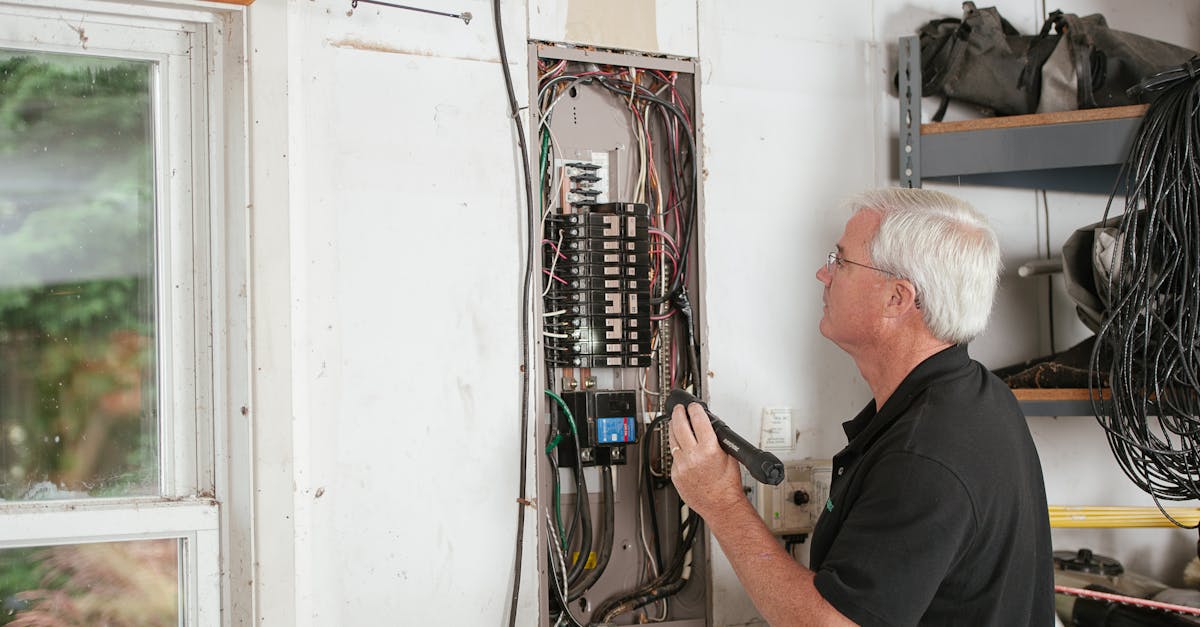
For technical guidance on page architecture and structured data, see the full local SEO for contractors guide and the visibility services overview.
Channel 4: Google Ads — Filling the Gaps LSA Misses
LSA covers the top position but has limited keyword targeting. Traditional Google Search Ads fill the gap for specific high-value queries and serve as a bridge while your organic rankings mature.
What to Target
Focus budget on:
- Emergency and urgent intent: "24 hour electrician [city]," "electrician open now," "no power house [city]"
- High-ticket services: "electrical panel upgrade [city]," "200 amp service upgrade," "EV charger installation [city]"
- Service-specific modifiers: "licensed electrician [city]," "same day electrician [city]," "generator installation [city]"
Negative keywords are non-negotiable: "how to wire," "DIY electrical," "electrician jobs hiring," "electrical engineering school," "electrical supply store." Without these negatives, a significant portion of your budget funds zero-intent clicks.
Call-only campaigns — ads that trigger a direct phone call rather than a website visit — consistently outperform standard search ads for emergency electrical calls because they eliminate all friction between search and contact.
LocaliQ analysis of 3,211 US home services search ad campaigns found that electricians have a 5.15% click-through rate and a $12.18 average cost-per-click — among the most cost-efficient trades in the dataset for paid search.
Channel 5: Reviews and Online Reputation
Reviews are the most underestimated conversion factor in electrical marketing. When two electrical companies appear side by side in the Local Pack, the one with 80 reviews at 4.8 stars wins over the one with 20 reviews at 4.9 stars — volume signals sustained quality, not a lucky streak.
Key data (sources: BrightLocal Local Consumer Review Survey 2025, Moz Local Ranking Factors, Rio SEO Local Search Consumer Behavior Study 2025):
- 87%+ of consumers read reviews before hiring a local home service business
- 75% of consumers read at least 4 reviews before making a decision
- Review signals account for approximately 16% of Local Pack ranking weight
- 89% of consumers are more likely to use a business that responds to all reviews
- Businesses with 50+ reviews have a significantly higher probability of appearing in the top 3 Local Pack positions
How to Build Reviews Systematically
The optimal moment to request a review is immediately after the job is completed and the customer is satisfied — when the panel is upgraded and the power is on, when the EV charger is tested and working, when the emergency is resolved.
A script that converts:
"Glad we got that sorted out for you. If you're happy with the work, a quick Google review would mean a lot — I can text you the direct link right now."
Realistic goal: 2-3 new reviews per week. At that cadence, you accumulate 100-150 reviews in a year — enough to dominate the Local Pack in most non-metro markets.
Respond to 100% of reviews within 24 hours. BrightLocal data shows only 53% of businesses respond to reviews consistently. Consistent, professional responses are a free competitive advantage over most competitors. For negative reviews: acknowledge the specific issue, apologize without admitting liability, and offer to resolve it offline. Never argue publicly.
For a full review acquisition and reputation management strategy, see Google reviews for home service businesses.
Channel 6: Conversion — Speed and Friction Are Your Differentiators
Capturing attention on Google is half the work. The other half is not losing the customer at the moment of contact.
For electrical emergencies, response speed is part of the service. Harvard Business Review research found that leads contacted within 5 minutes are 100x more likely to convert than leads reached after 30 minutes. LocalImpact's home services consumer survey found that 85% of consumers contact 2-4 providers before making a decision — the first to respond with a live voice wins in the majority of emergency scenarios.
The scale of the problem: CallJolt data indicates that 60-65% of calls to electrical contractors go unanswered during business hours, and that rate climbs above 85% after hours — precisely when electrical emergencies happen.
Conversion Checkpoints Every Electrical Company Needs
- Click-to-call on every page: on mobile, the phone number must be a tappable button in the first screen without scrolling. More than one tap loses measurable conversions.
- Answer rate matters more than ad spend: a $4,000/month Google Ads budget is wasted if 40% of calls go to voicemail. Track your answer rate in your GBP and LSA dashboards.
- After-hours coverage: electrical emergencies are not 9-to-5. If you offer after-hours service, you must have a reliable way to answer — a live answering service, on-call technician, or AI phone receptionist.
- AI phone receptionist: an AI receptionist answers 100% of calls, captures the customer name, address, and job description, and confirms a booking window without a human agent. For electrical companies running 2-8 trucks, this eliminates revenue loss from missed calls during active jobs. See the full breakdown: AI phone receptionist for contractors and the AI receptionist vs call center comparison.
- Text-back automation: for missed calls, an automatic SMS within 60 seconds — "Hi, this is [Company]. Sorry we missed you — we can have someone out today. Reply or call us back at [number]." — recovers a meaningful share of lost leads.
For a deeper look at the full conversion layer, see the conversion services overview.
Channel 7: Commercial vs. Residential — Different Games, Different Rules
Most electrical companies serve both residential and commercial customers. The marketing approach for each is fundamentally different.
Residential electrical marketing is Google-first:
- GBP, LSA, local SEO, and Google Ads drive the majority of inbound calls
- Customers search impulsively (emergency) or with moderate research (planned work)
- Reviews and response speed close the sale
- Average tickets: $200-$600 for service calls, $800-$2,000 for EV charger installs, $1,500-$5,000 for panel upgrades
Commercial electrical marketing is relationship-first:
- General contractors, property managers, facility directors, and commercial real estate firms rarely search Google for their electrical contractors
- LinkedIn presence, referral networks, direct business development, and past-project portfolios drive commercial pipeline
- Sales cycles are measured in weeks or months, not hours
- Typical commercial project tickets run $10,000-$500,000+
- Commercial and industrial electrical accounts for roughly 60% of the industry's $220B in revenue, but the majority does not originate from inbound digital search
The practical implication: for electricians serving both segments, size your digital marketing budget to residential work (fast ROI, measurable lead cost) while commercial networking runs in parallel as a longer-horizon pipeline. Do not expect your GBP to generate commercial accounts.
Channel 8: High-Value Services — EV Chargers, Panel Upgrades, and Maintenance
The three fastest-growing revenue streams for US residential electricians all benefit directly from proactive marketing and clear service pages.
EV Charger Installation
EV charger installation has moved from a niche service to a mainstream revenue line. An estimated 3.8 million EV charger installations were completed in the US in 2025, up from 1.2 million in 2022 — a 217% increase in three years (CallJolt). The National Renewable Energy Laboratory projects 50 million EVs on US roads by 2030, each requiring a home charging solution.
Average Level 2 home charger installation: $800 to $2,000, taking 3-5 hours. Many installations — particularly in homes with older 100-amp service — trigger a panel upgrade conversation, combining a $1,200 charger install with a $1,500-$3,000 panel upgrade for a combined ticket of $2,700-$5,000 on a single visit.
Marketing action: create a dedicated /ev-charger-installation-[city]/ page. Target "Level 2 EV charger installation [city]" and "EV charger electrician near me" in Google Ads and LSA.
Panel Upgrades
Panel upgrades are the highest-ticket residential job type outside new construction. An estimated 48 million US homes have electrical panels that are 40 or more years old and due for replacement. Insurance industry scrutiny of older Federal Pacific, Zinsco, and Pushmatic panels has created additional demand as homeowners face premium increases or coverage denials.
Average job costs by type:
| Panel Job | Average Cost | Time Required |
|---|---|---|
| 100A to 200A service upgrade | $1,500-$3,000 | 1 day |
| 200A service with new meter base | $2,500-$5,000 | 1-2 days |
| Sub-panel addition | $1,200-$2,500 | 4-8 hours |
| Full rewire (older home) | $8,000-$20,000 | 3-10 days |
| Knob-and-tube replacement | $10,000-$30,000 | 1-3 weeks |
Source: CallJolt Electrical Contractor Statistics 2026.
Marketing action: create dedicated panel upgrade service pages. Use before-and-after photos. Mention insurance requirements and older panel brand names (Federal Pacific, Zinsco) in your GBP description and service pages — these are high-intent search terms that homeowners use when they have been flagged by their insurer.
Maintenance and Recurring Revenue
Annual electrical inspections and service agreements are underused by most residential electricians. A $149/year electrical safety inspection plan — covering panel inspection, GFCI testing, smoke detector check, and arc-fault breaker audit — converts one-time customers into recurring clients and generates proactive referrals.
Proactive outreach calendar:
- September-October: generator readiness check before winter storm season
- January-February: heating season electrical load check for electric heat customers
- Ongoing: 12-month follow-up to customers who had significant work ("It has been a year since we upgraded your panel — want us to check the new circuits?")
For field service software that automates follow-up — including review requests, maintenance reminders, and customer communication — see the operations overview.

90-Day Action Plan
Marketing Channels by Priority and ROI
| Channel | Priority | Estimated Investment | Time to First Results |
|---|---|---|---|
| Google Business Profile | Critical | $0 (time only) | 4-8 weeks |
| Google Reviews | Critical | $0 (process only) | 4-10 weeks |
| Local Services Ads | High | $500-$3,000/month | Day 1 after approval |
| Mobile-first website | High | $1,500-$5,000 one-time | Immediate |
| Google Search Ads | High | $800-$5,000/month | Day 1 |
| Local SEO (service pages) | High | $800-$2,500/month (agency) | 2-6 months |
| AI phone receptionist | High | $150-$400/month | Immediate |
| EV charger service page | High | Included in website cost | 4-8 weeks (SEO) |
| Panel upgrade service page | High | Included in website cost | 4-8 weeks (SEO) |
| Maintenance program | Medium | Internal time | 3-6 months |
| Social (Facebook, Nextdoor) | Supplemental | Time or $200-$500/month | 2-4 months |
Week-by-Week Execution
Weeks 1-2: Visibility Foundation
- Complete your GBP to 100%: every service listed (including EV charger and panel upgrade), 20+ photos uploaded, service area defined, hours accurate including emergency availability
- Send a review request via text to your last 15-20 satisfied customers with a direct Google review link
- Verify your website has a tap-to-call button above the fold on mobile on every page
- Apply for Local Services Ads — verification takes 1-3 weeks but leads start from day of approval
- Set up text-back automation for missed calls
Weeks 3-6: Active Acquisition
- Create or optimize service pages for your highest-value jobs: panel upgrades, EV charger installation, emergency electrical, generator installation
- Launch Google Search Ads with a test budget of $500-$1,000 on emergency and high-intent keywords
- Activate call-only campaigns for "emergency electrician [city]" and "panel upgrade [city]" variations
- Brief every technician on the post-job review request script; prepare a card with a QR code to your Google review link
- Claim and optimize your Nextdoor business page
Weeks 7-12: Optimization and Recurring Revenue
- Review GBP dashboard: calls received, search queries driving views, customer actions (calls, website visits, direction requests)
- Optimize Google Ads: add negative keywords, pause low-performing ad groups, increase budget on converting keywords
- Build a customer follow-up list from all jobs in the past 12 months
- Design and launch a basic annual electrical inspection program
- Goal by week 12: appear in the Local Pack for your top 3 electrical search terms in your primary market
The Mistakes That Cost Electrical Companies Revenue
- Incomplete GBP or fewer than 20 photos: the most common and most expensive mistake. A sparse profile loses emergency customers before the comparison begins.
- Phone number not tappable on mobile: the number must be a button, not plain text. One extra tap loses measurable conversions.
- Not responding to reviews: 89% of consumers prefer businesses that respond. Silence is a competitive gift to every competitor that does respond consistently.
- No EV charger or panel upgrade service pages: these are the two highest-growth, highest-ticket residential categories. If you do not have dedicated pages, you are invisible for planned-service searches.
- Running Google Ads without negative keywords: "how to wire a plug," "electrician jobs," "electrical engineering degree," "wire gauge calculator" — without these negatives, a significant portion of ad budget funds zero-intent clicks.
- Depending on lead aggregators (Angi, Thumbtack, HomeAdvisor) as the primary channel: these platforms fill gaps, but leads are shared with competitors, margins are compressed, and you build no proprietary asset over time.
- No follow-up system for past customers: a customer who trusted you once — for a panel upgrade, EV charger, or generator install — is far easier to retain than a new acquisition. No follow-up means paying full acquisition cost every single time.
For competitive intelligence and channel comparisons, see the comparisons section and the glossary of digital marketing terms for contractors.
What AI-Powered Search Means for Electrical Companies
Google AI Overviews, ChatGPT, and Perplexity are changing how some users discover local services. For emergency electrical calls, the impact is currently limited — true emergencies generate immediate-intent queries that Google resolves with the Local Pack and LSA, not with a generative summary.
What is changing is the visibility layer above traditional search. For planned electrical services — panel upgrade cost, EV charger installation process, choosing a generator size — AI summaries increasingly draw from well-structured web content and cited sources. Electrical companies that publish specific, data-backed content (cost guides, process explanations, before-and-after case studies with numbers) are more likely to be cited by AI systems than those with generic copy.
Structural requirements for AI citation readiness:
- LocalBusiness + Service schema markup on all key pages
- Consistent NAP (name, address, phone) across GBP, website, and all directories
- FAQ sections on service pages answering the exact questions customers search
- Specific, verifiable data: "Our average EV charger installation takes 3-4 hours and costs $900-$1,600 in [city] including the permit" beats "we offer competitive pricing"
For a full technical deep-dive on visibility across search and AI platforms, see the visibility services page and the complete blog index.
Electrical marketing in the US does not require a large budget or a complex strategy. It requires being visible when someone searches, credible when they review your profile, and reachable when they call.
The companies winning in US electrical marketing in 2026 are not outspending their competitors. They are showing up in the Local Pack, answering every call, collecting reviews after every job, and capturing the fastest-growing revenue streams — EV charger installation and panel upgrades — with dedicated service pages most competitors still do not have.
Start with your Google Business Profile and your phone answer rate. Fix both this week. Everything else compounds from there.
We answer before we start
Q/01How much does Google Local Services Ads cost for electricians in the US?
Google Local Services Ads for electricians operate on a pay-per-lead model. Based on real campaign data from Searchlight Digital (112 accounts, $335K in spend), the average LSA cost per lead for electrical contractors is $39 as of February 2026, with a 43.4% booking rate and a $1,434 average ticket — producing an 8.52x closed ROAS. A separate dataset from 99 Calls tracking 6 active electrical LSA campaigns puts the average at $66.50 per lead (median $64.62), with a typical range of $54.52 to $80.03. Market competitiveness, service area, and profile quality drive the spread. At an average electrical ticket of $800-$2,000 for panel work or EV charger installation, even a $67 lead cost delivers a 12-30x return before repeat business.
Q/02How many Google reviews does an electrical company need to rank in the Local Pack?
BrightLocal data shows that Local Pack businesses in home service categories average 40-80 reviews with a mean rating of 4.5 stars or higher. Review recency matters as much as volume: two new reviews per week outperforms 100 stale reviews from two years ago. According to Moz Local Search Ranking Factors research, review signals (quantity, velocity, diversity) account for roughly 16% of Local Pack ranking weight. A practical target for a new electrical business is 50 reviews within the first 12 months, with a sustainable cadence of 2-3 per week. Volume signals sustained quality to prospective customers — 80 reviews at 4.8 stars consistently outperforms 20 reviews at 5.0 stars in booking conversion.
Q/03What is the fastest way for a new electrical company to get leads from Google?
For a new electrical company with no established Google Business Profile ranking, Local Services Ads (LSA) is the fastest path to inbound leads — leads start from day of approval, which typically takes 1-3 weeks for license verification and background checks. In parallel: complete your GBP to 100%, request reviews from past customers, and ensure your website has a tap-to-call button above the fold on mobile. Traditional Google Ads can run while you wait for LSA approval. Organic local SEO takes 4-12 weeks minimum to generate calls. The combination of LSA plus an optimized GBP profile plus 20+ real photos is the fastest multi-channel setup for a new or recently rebranded electrical business.
Q/04How important is EV charger installation as a revenue stream for residential electricians?
EV charger installation has become one of the fastest-growing residential revenue streams for US electricians. An estimated 3.8 million EV charger installations were completed in the US in 2025, up from 1.2 million in 2022 — a 217% increase in three years. The average Level 2 home charger installation costs $800 to $2,000 and takes 3-5 hours, making it one of the most profitable job types per hour. Many EV charger installs also trigger panel upgrade conversations when older 100-amp service is present, creating natural upsell opportunities to $1,500-$5,000 jobs. The National Renewable Energy Laboratory projects 50 million EVs on US roads by 2030, each requiring a home charging solution.
Q/05How fast does an electrical company need to respond to an online lead?
Harvard Business Review research found that leads contacted within 5 minutes are 100 times more likely to convert than those reached after 30 minutes. For electrical emergencies — power outages, tripped breakers, burning smells — callers typically try 2-3 businesses before booking the first to answer. Industry data from CallJolt indicates that 60-65% of calls to electrical contractors go unanswered during business hours, rising above 85% after hours. Each missed call for a panel upgrade or EV charger installation represents $1,500-$5,000 in potential revenue. An AI phone receptionist answers 100% of calls, captures job details, and confirms a booking window without a human agent — eliminating the most common and most expensive revenue leak in electrical businesses.
Q/07What is the difference between residential and commercial electrical marketing?
Residential electrical marketing is dominated by Google — Local Pack, LSA, and organic SEO drive the majority of inbound calls for service, repair, and installation work. Commercial electrical marketing relies far more heavily on referral networks (general contractors, property managers, facility directors), LinkedIn presence, and direct business development. Commercial projects have longer sales cycles, higher ticket values, and are rarely triggered by a Google search. For electricians serving both segments, the digital marketing investment should be sized to residential conversion value (fast ROI) while commercial networking runs in parallel as a longer-horizon pipeline.

