
Marketing for Painters in the USA (2026)

Complete marketing guide for US painting contractors in 2026. Covers Google Business Profile, Local Services Ads, local SEO, Google Ads, online reviews, before-and-after visual proof, the estimate-to-close process, AI phone receptionist, seasonal demand, and recurring commercial revenue. Built for residential and commercial painters who win jobs on trust and visible craftsmanship. Based on verified US industry data and proven home-services channel benchmarks rather than invented statistics.
The US painting industry is large, fragmented, and overwhelmingly local. IBISWorld tracks tens of thousands of painting and decorating businesses across the country, most of them small crews competing inside a single metro. Painting is also one of the most visual trades in home services: the customer is buying a result they can see, and they decide which contractor to trust largely on the strength of the proof you show them before you ever lift a brush.
That changes how marketing works for a painting company. A homeowner planning a kitchen-cabinet refinish or a full exterior repaint is not in an emergency. They are comparing two or three contractors, reading reviews, scrolling before-and-after photos, and waiting for the first crew that responds quickly and looks credible. The painters who win are not the cheapest — they are the most visible and the most trustworthy at the moment of decision.
This guide covers every channel that drives painting leads in the US in 2026, with real data, clear priorities, and no invented numbers.
Why Painting Is a Visual, Trust-First Sale
Painting leads divide into two broad buying modes, each with different marketing dynamics:
- Planned residential repaints: interior walls, cabinet refinishing, full exterior repaints. Larger ticket, multiple estimates, weeks of consideration, heavy reliance on visual proof and reviews.
- Commercial and recurring work: offices, retail, multifamily turns, HOA exteriors, property-management repaints. Relationship-driven, repeat revenue, won through reputation and reliability rather than a single search.
Unlike emergency trades, the painting customer rarely books the first company they find. They book the company that looks like it will not make a mess of their home. That trust is built before the estimate through photos, reviews, and a fast, professional first response. Everything below is structured around being visible when they search and credible when they compare.

Channel 1: Google Business Profile — Your Visual Storefront
For US painting companies, Google Business Profile (GBP) is the highest-leverage free asset you have. When a homeowner searches "house painter near me" or "cabinet painting [city]," the Local Pack — the map with three businesses at the top — captures the majority of clicks. For a visual trade, GBP is where your photo library does the selling.
According to Google data cited by BrightLocal, complete profiles receive far more clicks than incomplete ones, and businesses with photos earn 42% more direction requests and 35% more website clicks.
How to Optimize a Painting Company's GBP
- Primary category: select "Painter" as the exact primary category. This is the highest-impact ranking signal.
- Service area business: set up as a service-area business and define your radius by city and zip code rather than a single storefront address.
- Description: use all 750 characters. Name your core services (interior, exterior, cabinet refinishing, commercial), your service area, and years in business.
- Photos, photos, photos: upload at least 30 real before-and-after sets. Surface type matters — cabinets, exterior trim, ceilings, drywall repair. This is your single biggest GBP advantage as a painter.
- Services list: add each service with a short description (interior repaint, exterior repaint, cabinet painting, deck and fence staining, drywall repair, popcorn-ceiling removal).
- Weekly posts: post one finished project per week. Recency of activity correlates with stronger local rankings.
For broader local visibility strategy, see the visibility pillar for home services and the painters and handymen sector page.
Channel 2: Local Services Ads — Pay Per Lead From Day One
Local Services Ads (LSA) are Google's verified-contractor program for home services, and they put your painting business at the very top of the results page — above traditional Google Ads, above the Local Pack, with your rating, review count, and the Google Guaranteed badge.
Why LSA Works for Painting
- Pay per lead, not per click. You pay only when a homeowner contacts you. Home-improvement leads typically run $20-$50 each in US markets (WordStream benchmark data).
- Dispute invalid leads for a credit.
- Pause when booked. Seasonal demand makes this valuable — throttle exterior spend up in spring, down in winter.
- Google Guaranteed badge adds a meaningful trust signal for a job that involves strangers working inside the home.
To qualify, you need the business license your state or municipality requires, general liability insurance, and to pass Google's background-check onboarding. Against a residential repaint that frequently runs into the thousands (Angi cost data), LSA is one of the highest-ROI acquisition channels available to a painter.
Channel 3: Local SEO — The Pages That Generate Estimates
Local SEO works alongside GBP. While GBP captures map searches, optimized web pages capture planning-stage searches and reinforce the authority signals the Maps algorithm reads.
BrightLocal research shows that nearly all consumers use the internet to evaluate local businesses, and a large majority of home-improvement searches happen on mobile.
Minimum Page Architecture for a Painting Company
Each page needs a clear service description, the city name in the title and H1, a click-to-call button above the fold on mobile, real before-and-after photos, and a "free estimate" offer.
Priority pages to build:
/interior-painting-[city]/— steady year-round demand/exterior-painting-[city]/— seasonal, high-ticket/cabinet-painting-[city]/— high-margin, growing search volume/commercial-painting-[city]/— recurring revenue path/deck-staining-[city]//[neighboring-suburb]-painters/— one page per city or zip you serve
Local SEO vs. Traditional SEO: Key Differences
| Factor | Local SEO (Maps Pack) | Organic SEO |
|---|---|---|
| Primary signal | GBP completeness, photos, reviews | Website authority and content depth |
| Review impact | High — direct ranking factor | Indirect via click-through rate |
| Time to results | 4-12 weeks | 3-9 months |
| Best content type | Before-and-after project photos | Cost guides, color and prep how-tos |
| Geographic scope | Within your service area | Broader regional reach |
| Cost per click | None | None |
Source: Whitespark Local Search Ranking Factors, Moz Local Ranking Factors.
For technical page architecture and structured data, see local SEO for contractors and the guide to service and city pages.

Channel 4: Google Ads for High-Intent Painting Searches
LSA covers the top slot but offers limited keyword control. Traditional Google Search Ads let you target the specific, high-value queries that signal a buyer ready to schedule an estimate.
What to Target
- Service-specific intent: "cabinet painting [city]," "exterior house painters [city]," "commercial painting contractor [city]"
- High-ticket modifiers: "whole house repaint cost," "professional painters [city]," "licensed insured painter [city]"
- Seasonal pushes: exterior keywords in spring and summer, interior and cabinet keywords in fall and winter
Budget Guidance by Market Size
| Market Size | Monthly Budget | Expected Estimate Requests |
|---|---|---|
| Small city (under 100k pop.) | $400-$1,000 | 10-30 requests |
| Mid-size city (100k-500k pop.) | $1,000-$2,500 | 25-70 requests |
| Major metro (500k+ pop.) | $2,500-$6,000 | 60-150 requests |
Source: WordStream Home Services PPC Benchmarks.
Negative keywords are non-negotiable: "painting jobs hiring," "how to paint," "paint colors," "paint store," "spray paint." Without negatives, Google spends your budget on DIY and job-seeker traffic that never converts.
For a full breakdown of paid acquisition and call handling, see the conversion services overview and the Google Ads for home services guide.
Channel 5: Reviews and Visual Social Proof
For painters, reviews and photos are the same trust engine. A homeowner letting a crew into their home for a week wants evidence that the last ten customers were happy and that the finished work looks clean.
Key data (sources: BrightLocal Local Consumer Review Survey, Moz Local Ranking Factors):
- The overwhelming majority of consumers read online reviews for local businesses
- Most consumers trust online reviews nearly as much as personal recommendations
- A large share are more likely to choose a business that responds to all reviews
- Review signals are a meaningful component of Local Pack ranking weight
How to Build Reviews Systematically
The best moment to ask is the final walkthrough, when the customer sees the finished room and the crew has cleaned up. That is peak satisfaction. A script that converts:
"We're really happy with how this turned out, and we hope you are too. If you wouldn't mind, a quick Google review with a photo of the finished room helps other homeowners in [neighborhood] find us. I can text you the link right now."
Asking the customer to attach a photo of the finished work is unique to painting — it gives you free, authentic before-and-after content directly on your profile.
Realistic goal: two to three new reviews per week, accumulating 100-plus in a year. Respond to every review within 24 hours. For a complete review acquisition system, see Google reviews for home service businesses and the science of online reviews.
Channel 6: Conversion — Win the Estimate, Win the Job
Getting found is half the work. The other half is the estimate-to-close process, where most painting companies quietly lose jobs.
Harvard Business Review research found that leads contacted within five minutes are dramatically more likely to convert than those reached after thirty. Homeowners request two or three painting estimates at once, so the first contractor to answer and book the walkthrough usually controls the deal.
Conversion Checkpoints Every Painter Needs
- Click-to-call on every page: a tappable phone button in the first mobile screen. Every extra tap loses leads.
- Answer every inbound call: crews are on ladders all day, so missed calls are the default failure mode for painters. An AI phone receptionist answers 100% of calls, qualifies the job, and books the estimate slot without interrupting the crew.
- Same-day estimate scheduling: offer in-home or video walkthroughs within 48 hours. Speed beats price more often than painters expect.
- A clean, itemized quote: a vague verbal number loses to a clear written estimate that lists prep, primer, number of coats, and warranty. See quotes that win more jobs.
- Text-back automation: an automatic SMS within 60 seconds of a missed call recovers a real share of lost estimate requests. See lead follow-up for home service businesses.
Channel 7: Social Media as Portfolio and Proof
For painting, social media is a genuine asset — more so than for emergency trades — because the work is inherently visual and shareable.
What Works on Social for Painters
- Before-and-after reels: the single best-performing format. A 15-second slider from tired walls to crisp finish stops the scroll.
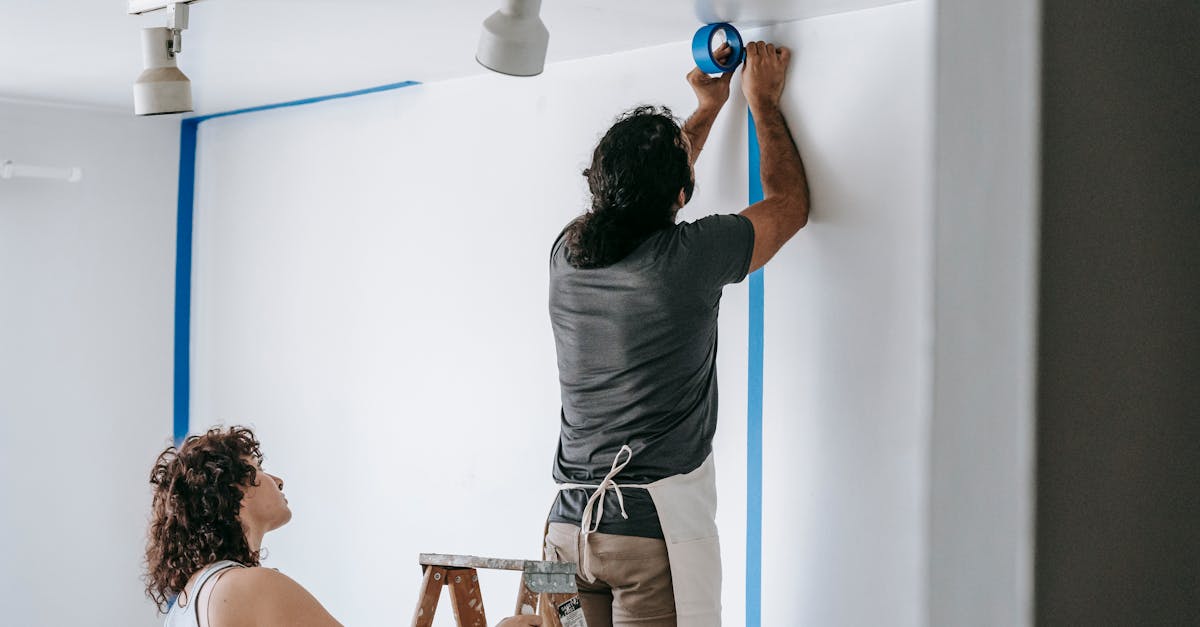
- Time-lapse of a repaint: taping, cutting in, rolling, reveal. It demonstrates competence and care without a word.
- Color and trend content: "3 cabinet colors selling homes in [city] this year." This drives saves and shares and positions you as the local expert.
- Reposted reviews with the finished photo: social proof that already exists, repackaged.
- Crew introductions: names and faces reduce the "stranger in my home" anxiety that delays a homeowner's decision.
Nextdoor is especially strong for residential painting in suburban US markets, where neighbor recommendations drive booking decisions. Facebook reaches the 35-65 homeowner demographic that buys most repaints. Instagram showcases premium cabinet and exterior work. None replaces GBP for capturing search demand, but together they form the trust stack that converts a profile visitor into a booked estimate. See social proof and trust for home services.
Channel 8: Commercial and Recurring Revenue
The most stable painting businesses are not chasing one-off interior jobs forever — they build a recurring commercial base. Acquiring a repeat property-management or HOA account is far cheaper over time than winning a new homeowner every month. According to Harvard Business Review, modest gains in customer retention can lift profits substantially.
Building Recurring Painting Revenue
- Property management and multifamily turns: apartment communities repaint units constantly. One signed PM account can mean steady year-round volume.
- Commercial maintenance contracts: offices, retail, and HOAs that repaint exteriors and common areas on a cycle.
- Past-customer reactivation: a homeowner who loved their interior repaint is the easiest exterior or cabinet sale you will ever make. A simple 12-18 month follow-up ("It's been a year since we painted your living room — ready to tackle the exterior before summer?") reactivates dormant revenue.
Minimum viable tracking system: record every job (customer, address, service, date, ticket) in a CRM, export customers from 12-18 months prior each month, and reach out proactively. For software that automates this for painting crews, see the ServiceTitan vs Housecall Pro vs Jobber comparison and the operations overview.
90-Day Action Plan
Marketing Channels by Priority and ROI
| Channel | Priority | Estimated Investment | Time to First Results |
|---|---|---|---|
| Google Business Profile | Critical | $0 (time only) | 4-8 weeks |
| Google Reviews + photos | Critical | $0 (process only) | 4-10 weeks |
| Local Services Ads | High | $400-$2,500/month | Day 1 |
| Before-and-after social | High | Time only | 2-4 weeks |
| Mobile-first website | High | $1,500-$5,000 one-time | Immediate |
| Google Search Ads | High | $600-$4,000/month | Day 1 |
| Local SEO (service pages) | High | $700-$2,500/month (agency) | 2-6 months |
| AI phone receptionist | High | $150-$400/month | Immediate |
| Commercial / recurring base | Medium | Internal time | 3-9 months |
Week-by-Week Execution
Weeks 1-2: Visibility Foundation
- Complete GBP to 100%: every service listed, 30+ before-and-after photos, service area defined
- Text a review request (with a request to attach a photo) to your last 15-20 happy customers
- Confirm a tap-to-call button is above the fold on mobile on every page
- Apply for Local Services Ads
- Set up text-back automation for missed calls
Weeks 3-6: Active Acquisition
- Build or optimize 3-4 service pages (interior, exterior, cabinet, commercial) for your primary city
- Launch Google Search Ads with a $500-$1,000 test budget on high-intent keywords
- Start posting one before-and-after reel per week
- Train every crew lead on the final-walkthrough review script
- Claim and optimize your Nextdoor business page
Weeks 7-12: Optimization and Recurring Revenue
- Review GBP and LSA dashboards: calls, queries, disputed leads
- Add negative keywords and shift budget toward converting terms
- Build a past-customer follow-up list from the last 18 months
- Identify and pitch 3-5 local property managers or HOAs for recurring work
- Goal by week 12: appear in the Local Pack for your top painting search terms in your primary market
The Mistakes That Cost Painters Jobs
- A GBP with fewer than 20 photos: for a visual trade, a sparse photo library is the most expensive mistake. Show the work.
- Missing the inbound call: crews on ladders means voicemail by default. Every missed call is a booked estimate handed to a competitor. See the real cost of missed calls for contractors.
- Slow estimate follow-up: when a homeowner has three quotes pending, the slow responder loses regardless of price.
- Vague verbal quotes: a clear, itemized written estimate with warranty terms beats a cheaper number scribbled on a card.
- Running ads without negative keywords: "painting jobs," "how to paint," "paint colors," "paint store" drain budget with zero-intent clicks.
- No system to reactivate past customers: the homeowner who loved their interior is your easiest exterior sale, and most painters never call them back.
For competitive benchmarks and definitions, see the comparisons section and the glossary.
What Is Changing with AI-Powered Search
Google AI Overviews, ChatGPT, and Perplexity increasingly answer planning-stage questions like "how much does it cost to repaint a house exterior" or "should I paint or replace my kitchen cabinets." For painting — a considered, research-heavy purchase — this matters more than for emergency trades.
Painting companies that publish specific, data-backed content (real cost ranges, prep process explanations, durability comparisons, neighborhood project case studies) are more likely to be cited by AI systems than those with generic copy.
Structural requirements for AI-citation readiness:
- LocalBusiness + Service schema markup on all key pages — see schema and structured data for home services
- Consistent NAP across GBP, website, and directories
- FAQ sections answering the exact questions homeowners ask about cost, prep, and timing
- Specific, verifiable data: "A typical 2,000 sq ft exterior repaint in [city] runs $X-$Y and takes 3-5 days" beats "competitive pricing"
For the full visibility-across-search-and-AI playbook, see the visibility services page, how to show up in ChatGPT and Perplexity, and the complete blog index.
Painting marketing in the US does not reward the biggest budget — it rewards the company that is visible when a homeowner searches, that shows undeniable before-and-after proof, that answers the phone, and that books the estimate first. Start with your Google Business Profile and your photo library this week, ask every satisfied customer for a review with a finished-room photo, apply for Local Services Ads, and make sure no call goes to voicemail.
Everything else is optimization on top of that foundation. The painters winning in 2026 are not out-spending their competitors — they are out-executing them on visible proof and a fast, professional estimate process.
We answer before we start
Q/01How much does Google Local Services Ads cost for painters in the US?
Google Local Services Ads run on a pay-per-lead model, so painting contractors pay only when a homeowner calls or messages through the ad. Cost per lead for home-improvement categories typically falls in the $20-$50 range depending on metro size and job type, with interior repaints generally cheaper to acquire than exterior or commercial work. You can dispute invalid leads (wrong number, out of area, spam) for a credit and pause the campaign when your schedule fills up. Against an average residential repaint ticket that often runs into the thousands of dollars, even a $50 lead can produce a strong return when your close rate is healthy.
Q/02How important are before-and-after photos for a painting company?
Before-and-after photos are the single most persuasive content a painting company can publish, because painting is a visual product and the result is the entire value proposition. Add real project photos to your Google Business Profile, your service pages, and your social channels. Google reports that profiles with photos earn meaningfully more direction requests and website clicks than sparse profiles. Pair each before-and-after with the neighborhood name and surface type (cabinets, exterior trim, drywall) so the image doubles as local-SEO and AI-citation signal, not just decoration.
Q/03How many Google reviews does a painting business need to compete locally?
BrightLocal research shows that consumers read online reviews for almost every local service decision and trust them nearly as much as personal recommendations. For painters, a practical target is 50 or more reviews at a 4.7-plus average within the first year, with steady recency. According to Moz Local Search Ranking Factors, review signals are a significant share of Local Pack ranking weight. Because painting is a considered, photo-driven purchase, reviews that mention cleanliness, on-time finish, and color accuracy convert better than generic five-star text.
Q/04How fast should a painter follow up on an estimate request?
Harvard Business Review research found that leads contacted within five minutes are far more likely to convert than those reached after thirty minutes. Painting is rarely a true emergency, but homeowners usually request two or three estimates at once, so the first contractor to respond and book the walkthrough sets the anchor. A same-day reply and a scheduled in-home or video estimate within 48 hours dramatically improves close rate. An AI phone receptionist can capture every inbound call, qualify the job, and book the estimate slot even while your crew is on a ladder.
Q/05Is painting demand seasonal, and how should marketing budget follow it?
Exterior painting in most US climates peaks in late spring through early fall, when temperatures and humidity allow paint to cure properly. Interior repaints and cabinet refinishing fill the winter months and smooth out the year. A smart budget front-loads exterior and Local Services Ads spend in spring, then shifts toward interior, cabinet, and commercial keywords in the colder months. Publishing seasonal content ('best time to paint your home exterior in [city]') captures planning-stage searches months before the homeowner is ready to buy.
Q/06Which field service software is best for a painting company?
ServiceTitan suits larger painting operations that also run other trades and need advanced reporting and marketing attribution. Housecall Pro fits small-to-midsize residential painting crews that want online booking, automated review requests, and simple scheduling. Jobber works well for solo painters and small teams focused on clean estimates and invoicing. The right choice depends on crew size and how much estimate-to-invoice automation you need. See the dedicated comparison for a full feature and pricing breakdown.

