
Marketing for Small Construction Firms UK

Small construction firms sell high-value projects with long, considered sales cycles: extensions, renovations, loft conversions, and new builds worth tens of thousands of pounds. This guide covers every marketing channel a UK building company needs: Google Business Profile, a portfolio-led website, FMB membership and trust signals, local SEO, reviews, the consultative quote, and the follow-up systems that win projects over weeks and months.
Small construction firms operate at the opposite end of the spectrum from emergency trades. There is no midnight call-out, no two-minute decision. Instead there is a homeowner who has been dreaming about a kitchen extension for two years, has saved or borrowed a large sum, and is terrified of choosing the wrong builder. The project is worth tens of thousands of pounds, the sales cycle runs for weeks or months, and the deciding factor is trust.
That changes everything about how you market. Speed of answer still matters, but proof, reputation, and patient follow-up matter more. A building firm's marketing job is to be the obvious, low-risk, well-evidenced choice when the homeowner is finally ready to commit — and to nurture the relationship across the long gap between first enquiry and signed contract.
This guide works through the channels in priority order and ends with a 90-day action plan. It is a companion to our broader marketing for builders guide, focused specifically on small firms tackling extensions, renovations, and new builds.
Why Most Small Builder Marketing Fails
The most common mistake is relying entirely on word-of-mouth and a thin Facebook page, then wondering why the pipeline dries up between referrals. The second is chasing paid leads before the proof exists to convert a high-value buyer.
Before any paid spend, three things must be true:
- Your portfolio of completed projects is visible, well-photographed, and easy to browse.
- Your trust signals — FMB or equivalent membership, insurance, warranties, references — are displayed everywhere a nervous buyer looks.
- You have a follow-up system that nurtures enquiries across a long sales cycle rather than letting them go cold.
Everything else builds on that foundation.
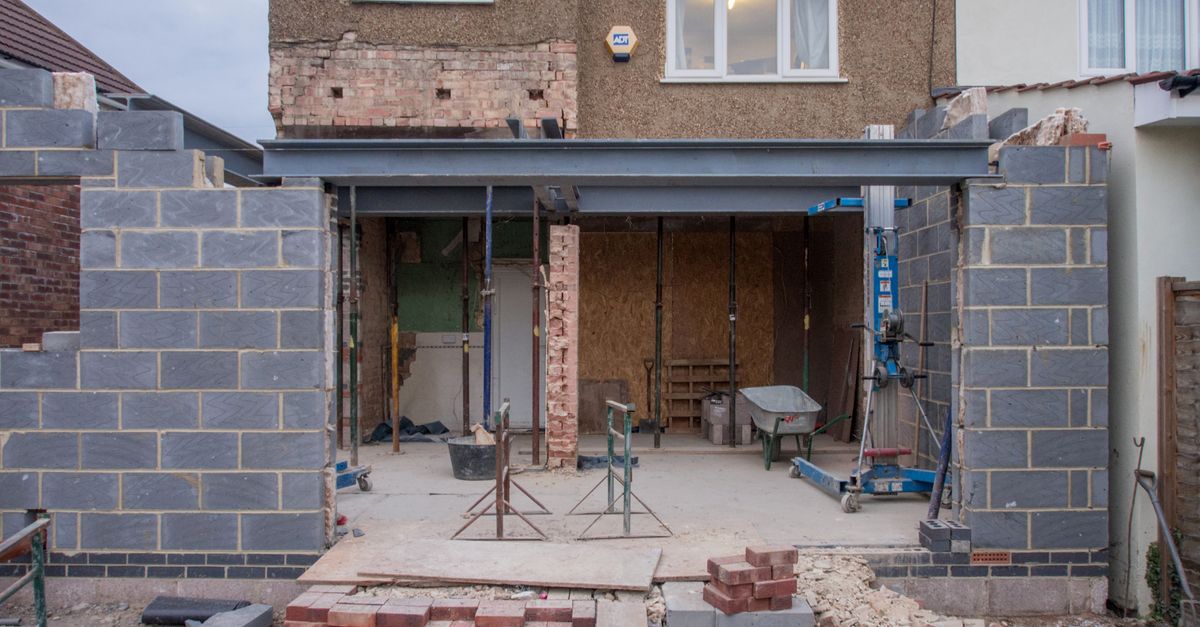
1. Portfolio-Led Website: Your Most Important Asset
For construction, the website is the centre of gravity. Unlike an emergency trade, where the phone is everything, a building firm's buyer wants to browse finished work at length before they ever make contact.
What a construction portfolio needs
- Project case studies: each major job as its own page — the brief, the challenge, before/during/after photos, the timeline, and an honest client quote.
- Strong photography: invest in proper photos of finished projects. A professional shoot of two or three flagship jobs is among the highest-return spends a builder can make.
- Clear services: extensions, loft conversions, renovations, new builds, structural work — each its own page targeting its own search.
- Trust pages: accreditations, insurance, warranties, and references gathered in one reassuring place.
Technical performance still matters: target Largest Contentful Paint (LCP) under 2.5 seconds on mobile, compress heavy project images, and test with Google PageSpeed Insights. For structure, read our local SEO for tradespeople guide and our guide to service and location pages for local SEO.
2. Trust Signals: FMB, Insurance, and Warranties
For a purchase this large and this risky in the buyer's mind, trust is the conversion. Two firms quoting a similar price will not win equally — the one that visibly removes risk wins.
Display these prominently
- FMB membership: the Federation of Master Builders requires independent inspection and references, which is exactly why it reassures homeowners. Keep your Find a Builder listing complete and current.
- Insurance and warranties: public liability cover, structural warranties, and insurance-backed guarantees all reduce perceived risk.
- References and case studies: nothing reassures a nervous buyer like the chance to speak to a previous client or read a detailed project story.
- Site standards: a clean, safe, well-managed site is a selling point; show it in your content.
These belong on your About page, in your quote, on your Google Business Profile, and in conversation. Our guide to social proof and trust for trades covers how to present them credibly.
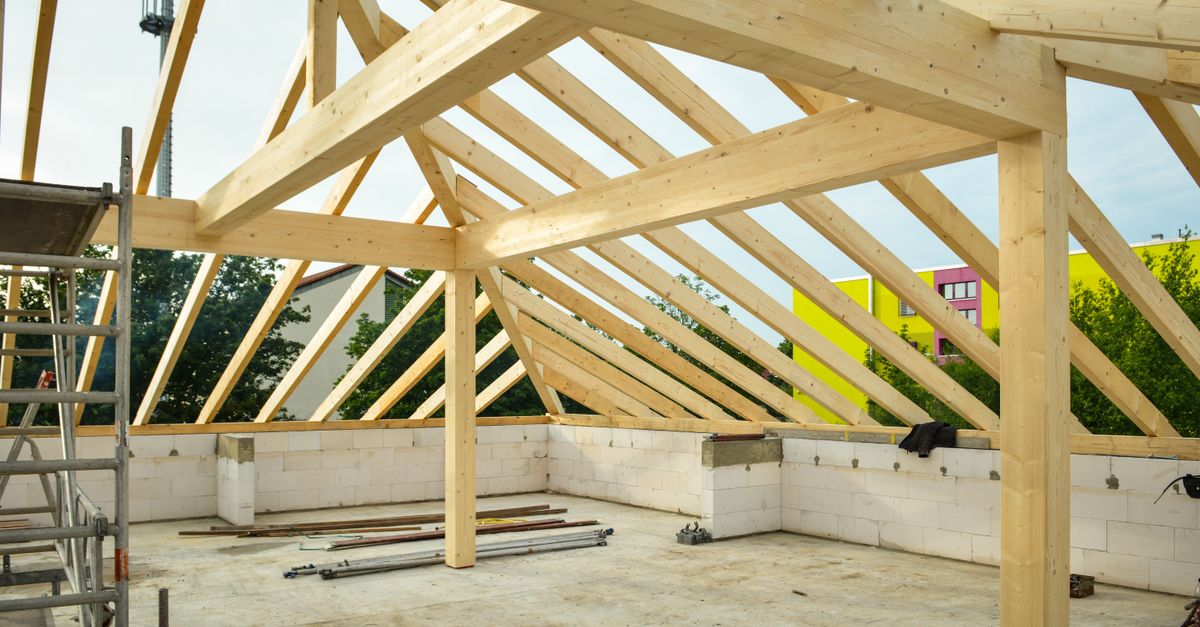
3. Google Business Profile and Local SEO
Even with a portfolio-led strategy, local search drives discovery. For "builder [town]", "extensions [town]", or "loft conversion [town]", the Google Local Pack captures a large share of clicks, per BrightLocal's research.
What to complete
- Primary category: "Construction company" or "Builder". Add secondary categories such as "Building restoration service", "Loft conversion", and "Bathroom remodeler" where relevant.
- Service area: the postcodes you genuinely cover. Quality over an implausible radius.
- Photos: at least 20 — finished projects, work in progress, the team, sign-written vehicles.
- Posts: one a week, usually a project milestone or completion.
Reviews are among the most consistent Local Pack ranking factors in BrightLocal's study. Ask for a detailed Google review at project completion, prompting the client to mention the type of project, the timeline, and how the site was run. See Google reviews for trades businesses and our guide to ranking on Google Maps for trades.
4. Directories and Endorsement Schemes
Directories play a supporting role for construction, with endorsement schemes carrying particular weight for high-value, trust-sensitive work.
Neutral comparison
| Platform | Lead type | How it works | Typical cost | Key strength |
|---|---|---|---|---|
| Checkatrade | Planned | Annual membership; homeowners search | £900-£1,500/yr | Volume of homeowner traffic |
| MyBuilder | Planned | Pay-per-lead; quote on posted jobs | Approx £5-£25/lead | Reach for smaller jobs |
| Which? Trusted Traders | Planned | Endorsement scheme with assessment | Annual fee | Trust with higher-value buyers |
| FMB Find a Builder | Planned | Member directory and search | Membership | Strong trust signal for big projects |
Read our full comparison of Checkatrade vs MyBuilder vs Rated People. For extensions and renovations, the endorsement-led routes — Which? Trusted Traders and FMB — often produce better-qualified, higher-budget enquiries than pay-per-lead platforms aimed at smaller jobs.
5. Conversion: Nurturing a Long Sales Cycle
This is where most building firms lose projects without realising it. A homeowner enquires in March about an extension, the builder quotes once, hears nothing, and assumes the job is lost. In reality the homeowner was still arranging finance and planning permission, and signed with the competitor who stayed in touch.
Fast first contact, patient follow-up
Research from Harvard Business Review shows the odds of qualifying a lead drop sharply after the first hour, so acknowledge every enquiry promptly. But construction is different from emergency trades in one crucial way: the booking is rarely immediate. The firms that win are the ones that:
- Book a site visit quickly and arrive prepared.
- Send a clear, itemised quote within a few days.
- Follow up helpfully at intervals — sharing a relevant case study, checking on planning progress, answering questions — without pestering.
Our guide to lead follow-up for trades businesses and the five-minute rule on lead response time cover the cadence. A simple CRM is invaluable for keeping long-cycle opportunities warm.
Don't lose the call
A builder on site cannot field every call, and a missed enquiry for a £40,000 project is an expensive miss. An AI phone receptionist answers, qualifies the project type and budget, and books a site visit, while a same-day SMS to missed callers keeps the door open. See the real cost of missed calls for tradespeople and the conversion pillar.

6. The Consultative Quote and Proposal
For construction, the quote is a sales document, not a price slip. It is often the moment the buyer decides whether you are the safe pair of hands.
What a winning construction proposal contains
- A clear, itemised scope of works with assumptions and exclusions stated plainly.
- A realistic timeline with key stages.
- Stage payments tied to milestones, which reassures the buyer about cash risk.
- Insurance, warranty, and accreditation details.
- A relevant case study or references.
- A validity period and clear next steps.
A professional, prompt proposal signals the reliability the buyer is paying for. See quotes that win more jobs and the science of pricing for tradespeople for the detail.
7. Social Media, Content, and Word-of-Mouth
Construction is visual and aspirational, which suits social and content marketing for the planned, long-cycle buyer.
What to post
- Project journeys: short series following an extension from foundations to finish.
- Before-and-after reveals of renovations.
- Honest, useful explainers: "Do I need planning permission for a single-storey extension?" or "What does a typical loft conversion timeline look like?"
- Client stories with permission.
Helpful content also supports being cited by AI search tools, which increasingly surface trades guidance; see our pieces on showing up in ChatGPT and Perplexity and generative engine optimisation for trades. And because referrals drive a large share of construction work, our guide to the science of word-of-mouth and referrals is essential reading.
8. Repeat, Referral, and Trade Revenue
The most resilient building firms build a pipeline that does not depend on cold leads.
- Architect and designer relationships: architects refer trusted builders to clients. A few strong relationships can feed a steady flow of qualified, high-value projects.
- Past-client referrals: a satisfied extension client is your best salesperson. A light annual check-in and an easy way to refer keeps you front of mind.
- Phased projects: many homeowners renovate in stages over years; staying in contact captures the next phase.
- Developer and commercial work: small developers and local businesses provide repeat, larger-scale work that smooths the lumpiness of one-off domestic projects.
For tools to manage these relationships and a long pipeline, see our operations pillar and CRM for trades businesses guide.
Channel Priority and ROI Summary
| Channel | Lead type | Monthly cost | Time to ROI |
|---|---|---|---|
| Portfolio website + photography | Planned | £0-£800 setup | 2-4 months |
| FMB / trust signals | Planned (conversion) | Membership cost | Ongoing |
| Google Business Profile | Planned | Free | 4-8 weeks |
| Review generation | All types | Free-£30 | Ongoing |
| Local SEO (project/service pages) | Planned | £0-£600 | 3-6 months |
| Endorsement schemes (Which?/FMB) | Planned | Annual fee | 2-4 months |
| AI receptionist + follow-up CRM | All (conversion) | £50-£150 | 1-3 months |
| Architect / referral relationships | Recurring | Time only | 3-12 months |
90-Day Action Plan
| Week | Action | Cost |
|---|---|---|
| 1 | Audit and complete Google Business Profile; add 20 project photos | Free |
| 1 | Commission a photo shoot of 2-3 flagship completed projects | £200-£600 |
| 2 | Build 3 project case-study pages on your website | £200-£600 |
| 2 | Run PageSpeed Insights; compress project images; fix slow hosting | £0-£300 |
| 3 | Display FMB, insurance, and warranties across site, quotes, and van | Free |
| 4 | Create service pages: extensions, loft conversions, renovations | £200-£500 |
| 5 | Request detailed reviews from your last 5 completed clients | Free |
| 6 | Apply to Which? Trusted Traders or complete your FMB listing | Annual fee |
| 7 | Set up a simple CRM to track long-cycle enquiries and follow-ups | £30-£80/mo |
| 8 | Implement AI receptionist + same-day missed-call SMS | £50-£150/mo |
| 9 | Build a proposal template with scope, timeline, and stage payments | Free |
| 10 | Introduce yourself to 5 local architects and designers | Free |
| 11 | Launch a project-journey series on Instagram/Facebook | Free |
| 12 | Review pipeline: enquiries, site visits, win rate; adjust spend | Free |
Where to Go Next
This guide covers the full marketing stack for a UK small construction firm. Dive deeper:
- Marketing for builders — complete guide
- Quotes that win more jobs
- Lead follow-up for trades businesses
- The science of online reviews
- Checkatrade vs MyBuilder vs Rated People
- Small construction firms trade hub
- Visibility — get found online
- Conversion — turn enquiries into bookings
- Operations — run a smoother business
- All blog articles
We answer before we start
Q/01How much should a small construction firm spend on marketing?
Building firms sell high-value, low-frequency projects, so even a modest number of won jobs justifies real investment. A firm turning over £500,000 might spend 4-8% of turnover, weighted towards a strong portfolio website, Google Business Profile, review generation, and FMB or trade-body membership. Because a single extension or renovation can be worth tens of thousands of pounds, marketing that wins even a handful of additional projects a year pays for itself many times over.
Q/02Is FMB membership worth it for a small builder?
Federation of Master Builders membership requires independent inspection and references, which is precisely why it carries weight with homeowners spending large sums. For renovation and extension work, where the buyer is anxious about cowboys and unfinished projects, a recognised trade-body badge plus the FMB's dispute resolution and warranty options reduces perceived risk and supports a higher price. Display your membership prominently and ensure your listing on the FMB's Find a Builder search is complete.
Sources & resourcesQ/03What is the most important marketing asset for a construction firm?
A portfolio of completed projects with strong photography and honest client stories. Renovation and extension buyers are spending life-changing sums and want proof you can deliver. A website and Google Business Profile filled with finished projects — ideally with before, during, and after images — is the single most persuasive asset. It converts hesitant enquiries and supports premium pricing better than any advert.
Sources & resourcesQ/04How long is the sales cycle for an extension or renovation?
Far longer than for reactive trades. A homeowner planning an extension may research for months, gather several quotes, secure planning permission, and arrange finance before committing. Marketing should nurture across this cycle rather than expect an instant booking: capture the enquiry early, stay in helpful contact, and be the trusted, well-reviewed name when they are ready. Disciplined follow-up over weeks wins more projects than any single touchpoint.
Sources & resourcesQ/05How many Google reviews does a building firm need?
There is no fixed threshold, but BrightLocal data from 2024 shows businesses in the top-3 Local Pack positions in competitive UK markets average 87 reviews above 4.5 stars. For high-value construction, the depth and specificity of reviews matters as much as the count: detailed reviews describing a smooth extension, clean site, and on-budget delivery reassure the next anxious buyer far more than a one-line five-star rating.
Q/06How do I win a high-value extension or renovation project?
These projects are won through trust built over time and confirmed in a consultative quote. Marketing books a qualified site visit; the visit and the proposal convert it. Provide a clear, itemised quote with a transparent scope, stage payments, realistic timeline, insurance and warranty details, and references or a relevant case study. A professional, prompt proposal sent within a few days of the visit signals the reliability anxious buyers are paying for.
Sources & resources

