Marketing for Locksmiths UK (2026)

UK locksmiths face a uniquely hostile marketing environment: a sector notorious for rogue operators and inflated call-out fees. The firms that win are those who combine speed-to-answer (emergency callers book the first locksmith who picks up), dominant local search presence, transparent pricing, and recognised accreditation — particularly MLA membership — to differentiate from scam operators. This guide covers every channel: Google Business Profile, local SEO, paid search, reputation management, and AI-powered after-hours call handling.
Locksmithing occupies one of the most commercially intense niches in UK trades. When someone is locked out of their home at midnight, they are not browsing — they are dialling. The first locksmith who answers wins the job. The second misses it entirely.
That emergency dynamic shapes everything about how a locksmith business should market itself. Speed of response is the primary conversion variable. But it does not work without visibility: if your Google Business Profile is incomplete, your website slow, or your review count low, the phone does not ring in the first place.
This guide covers the full marketing stack — from the highest-leverage channels to the longer-term plays that build a defensible business.
The Locksmith Sector's Unique Marketing Challenge
The UK locksmith sector has a documented problem with rogue operators. Which? has published multiple investigations into locksmiths who quote low prices over the phone, then charge multiples of the agreed amount on arrival — a practice that has driven widespread consumer distrust of the entire trade.
This creates a genuine marketing opportunity for legitimate operators. Every verifiable trust signal — MLA accreditation, transparent pricing, authentic Google reviews, a real physical address — increases your conversion rate relative to competitors who rely on anonymity.
Before investing in any channel, build your trust foundation:
- Apply for MLA Approved Company status — the sector's most recognised independent vetting.
- Publish your pricing structure on your website. Even indicative ranges ("lock change from £85") reduce the friction that sends customers to rogue operators.
- Display your company registration number and public liability insurance on every customer-facing page.
Everything else in this guide amplifies a business that has earned trust. Applied to a business without trust signals, it accelerates failure.
1. Google Business Profile: The Emergency Lead Engine
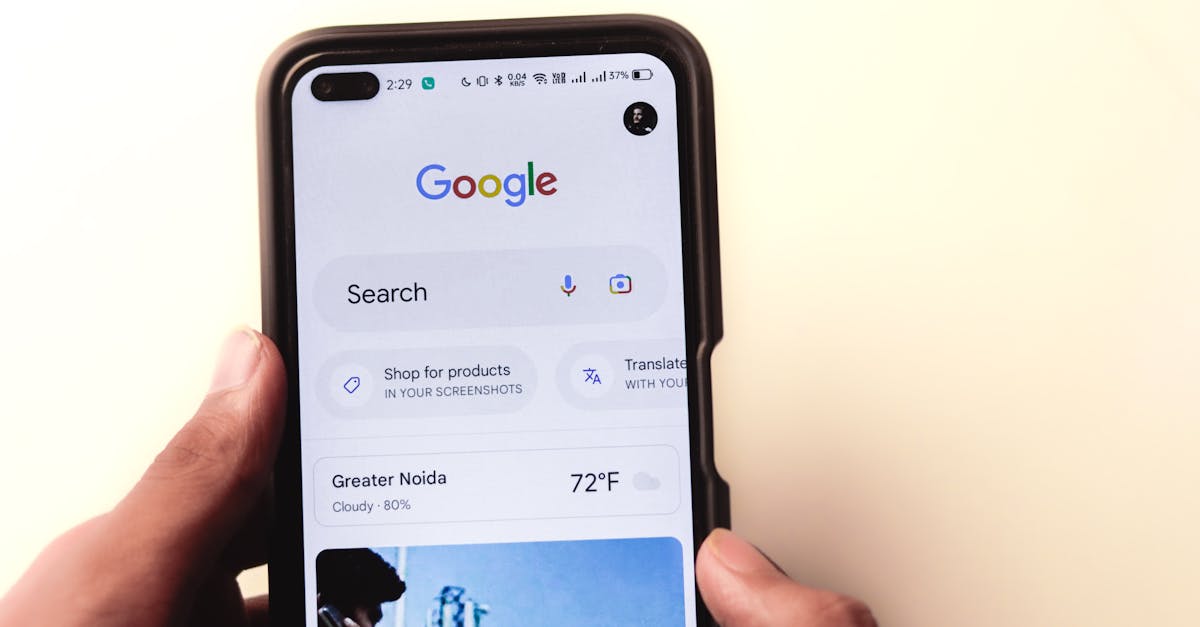
For searches like "locksmith near me" or "locked out [town]", the Google Local Pack — the map with three listings — captures the majority of clicks. BrightLocal's 2024 Local Consumer Review Survey consistently shows that Local Pack listings attract 44-61% of all clicks for local service queries. For mobile emergency searches — the dominant device for locksmith calls — that share is higher still.
Optimising your GBP listing
- Business name: use your exact trading name. Do not add keywords such as "Emergency Locksmith London" — this violates Google's guidelines and risks suspension.
- Primary category: "Locksmith". Add secondary categories: "Emergency Locksmith", "Safe Service" if relevant.
- Service area: set to the postcodes you genuinely cover. An implausibly large radius dilutes your relevance signals for the areas that actually matter.
- Hours: if you offer 24/7 emergency cover, ensure your hours reflect this. Use "More hours" to distinguish standard and emergency availability.
- Photos: upload at least 15 images — your van, your tools, completed jobs (before/after where the customer consents), your premises if relevant. Profiles with 100+ photos consistently outperform those with fewer than 10, per Google's guidance on Business Profile photos.
- Services and prices: list individual services (lock change, door opening, key cutting, security survey) with indicative prices. Transparent pricing here directly counters the rogue-operator stigma.
- Posts: publish one update per week — a completed job, a seasonal security tip, or a promotion. Weekly posts maintain freshness signals.
Reviews: your primary ranking and trust signal
Review count and average rating are the most consistent Local Pack ranking factors in BrightLocal's 2024 Local Pack Ranking Factors study. In competitive UK cities, the top-3 Local Pack benchmark is 87+ reviews at 4.5 stars or higher.
For locksmiths, every completed job is a review opportunity. Send a direct SMS immediately after the job:
"Hi [Name], thanks for calling us out today. If you have 2 minutes, a Google review would really help — here's the direct link: [link]."
Generate a direct review link free from Google's Place ID Finder. A specific, named review ("James arrived within 20 minutes, transparent pricing, excellent job on the Yale deadlock") carries more trust weight with potential customers than a generic five-star rating alone.
2. Your Website: Fast, Transparent, One Tap to Call
A locksmith website has one primary job: convert a stressed visitor into a caller within seconds. That means:
- Phone number above the fold, click-to-call on mobile.
- Load time under 2.5 seconds on a mobile connection. Test with Google PageSpeed Insights. Slow sites lose the emergency customer before a single word is read.
- Indicative pricing on the homepage. Even a range ("lock change from £85 + VAT, call-out from £35") reduces bounce rate and pre-qualifies customers who are comparing you with untransparent competitors.
- MLA logo and accreditation link in the header or hero section — not buried in the footer.
Essential pages
- Homepage: what you do, where you cover, how to call, price indication, MLA logo — above the fold.
- Emergency locksmith [town] landing pages — one per main service area. These capture high-intent searches at the moment of need.
- Services: residential lock change, commercial lock change, door opening, UPVC door repair, automotive locksmith, safe opening — each as a separate page with its own price range.
- About page: company registration, MLA membership number, years trading, insurance details. Trust signals that convert hesitant buyers.
For the full technical walkthrough on building local SEO authority, read our local SEO for tradespeople guide.
3. Google Ads: Winning the Emergency Search
Google Search Ads are the fastest route to the top of search results for high-intent queries. For locksmiths, the economics justify investment: an average residential lock change or emergency opening is worth £85-£200, and cost-per-click for "[emergency locksmith] [city]" ranges from £4 to £18 depending on competition.

Campaign structure for locksmiths
- Search campaign: phrase and exact match keywords — "locksmith [town]", "emergency locksmith [town]", "locked out [town]", "lock change [town]", "UPVC door repair [town]".
- Call-only ads: for mobile users, show your phone number as the ad itself. These consistently outperform standard text ads for emergency mobile searches.
- Ad copy: include your call-out fee, your MLA membership, and your response time. "MLA Approved · Fixed call-out fee · 20-minute response" in the headline converts better than generic claims.
- Ad scheduling: concentrate budget during peak hours — early morning (6am-9am, when people discover they are locked out leaving for work) and evenings (7pm-11pm). Reduce bids or pause overnight if you do not offer 24/7 cover.
- Location targeting: a 10-15 mile radius around your base in urban areas; 20-25 miles in rural areas.
- Negative keywords: "free", "DIY", "how to pick a lock", "locksmith jobs", "locksmith courses", "locksmith tools". Without a robust negative list, 30-50% of budget is typically wasted on non-converting searches.
For broader paid and organic channel strategy, see our visibility pillar.
4. Reputation Management and Transparent Pricing
The locksmith sector's rogue-operator problem makes reputation management more commercially important here than in almost any other trade. A prospective customer who finds conflicting price signals or a profile without reviews will simply move to the next listing.
Transparent pricing as a conversion tool
Rogue operators typically refuse to publish prices — the overcharge happens on arrival when the customer is already committed. Your transparency is a competitive weapon. Publish:
- A clear call-out fee (or state if there is none).
- Typical prices for common jobs: lock change from £X, door opening from £X.
- A statement that all prices are confirmed over the phone before arrival and that there are no hidden extras.
This copy does not need to be lengthy. Four clear sentences on the homepage convert customers who are comparing multiple listings.
MLA accreditation and how to use it in marketing
The Master Locksmiths Association is the UK's principal trade body. MLA-approved companies are vetted and inspected. Which? and Citizens Advice both reference MLA approval as the primary indicator of a trustworthy locksmith.
Where to display MLA membership:
- Website header or hero section.
- Google Business Profile description.
- Google Ads headline copy ("MLA Approved Locksmith").
- All quote documentation and invoices.
- Van signwriting.
Locksmiths with clearly displayed MLA membership consistently report higher call-to-booking conversion rates for new customers — the accreditation removes the primary objection (is this a scam?) before a word is spoken.

5. After-Hours Coverage: The AI Receptionist Advantage
Emergency locksmith calls follow a predictable pattern: they peak in the early evening (people returning home to find themselves locked out) and again late at night (after social events). A sole-trader locksmith who works alone cannot always answer the phone whilst on a job.
The cost of a missed after-hours call
Research cited in our 5-minute rule guide shows that the probability of converting a lead drops by more than 80% if the first contact is not made within five minutes. For a locked-out homeowner at 10pm, that window is closer to 60 seconds — they will call the next number on their list immediately.
An AI phone receptionist answers every call regardless of time, asks qualifying questions (type of lock, address, whether anyone is inside, urgency), captures the customer's details, and either books the job in your calendar or flags a genuine emergency for immediate callback.
For locksmiths specifically, look for these capabilities:
- 24/7 availability with no per-call fee structure that penalises high volume.
- Job qualification: distinguishing a routine lock change from a genuine lockout emergency.
- Address capture: so you arrive knowing the property type and can bring the right tools.
- Escalation logic: for emergencies that require immediate callback rather than next-day booking.
At £50-£150 per month, a single recovered after-hours emergency opening typically covers two or three months of subscription cost. See our AI phone receptionist vs call centre comparison for a detailed cost comparison.

6. Service Segments: Residential, Automotive, and Commercial
Marketing a locksmith business effectively requires acknowledging that three distinct buyer types exist — each with different search behaviour, decision timelines, and value.
Residential
The majority of demand: lock changes after a burglary or tenancy change, emergency openings, UPVC door repairs, and security upgrades. Search intent is high-urgency. Google is the primary channel. Response speed and transparent pricing are the primary conversion factors.
Automotive
Car lockouts and key programming for domestic vehicles. These jobs are sourced via Google ("car locksmith [town]", "locked out of car [town]") and occasionally through breakdown recovery referrals. Automotive work requires specific equipment investment (transponder programmers, OBD tools) but commands premium pricing — key programming for a modern vehicle can be worth £150-£400.
Commercial
Security surveys, access control, master key systems, and lock maintenance for offices, retail, and industrial premises. Commercial jobs are larger in value but longer in sales cycle — facility managers research and compare before committing. A dedicated commercial page on your website targeting "commercial locksmith [town]" and "access control installation [town]" is the primary acquisition channel.
7. B2B Accounts: Letting Agents and Property Managers
The most financially stable locksmith businesses combine reactive consumer work with a base of B2B accounts. A single letting agent with 150-300 properties in their portfolio generates predictable locksmith work year-round: lock changes between tenancies, emergency openings for locked-out tenants, and periodic security upgrades requested by landlords.
How to build a letting agent pipeline:
- Identify local letting agents via Propertymark's agent finder or a simple Google search for "[town] letting agents".
- Send a direct letter or email to the branch manager — not a generic enquiry form. Introduce your company, your MLA membership, your call-out SLA, and your invoicing process (accurate invoicing with photos is critical for agents who need to account to landlords).
- Offer a trial: handle their next three jobs at normal rates and demonstrate your response time and professionalism.
- Provide a dedicated contact number and a 24/7 availability commitment for their tenant emergencies.
A relationship with three to five active letting agent accounts can provide a floor of 30-60 jobs per year that reduces reliance on the volatility of consumer advertising.
Channel Priority and ROI Summary
| Channel | Job type | Typical monthly cost | Time to first ROI |
|---|---|---|---|
| Google Business Profile | Emergency + planned | Free | 4-8 weeks |
| Review generation (SMS) | All types | Free-£30 | Ongoing |
| Local SEO (service-area pages) | Planned + emergency | £0-£500 | 3-6 months |
| Google Ads | Emergency | £300-£1,500 | 1-3 weeks |
| MLA membership | All (trust signal) | ~£400/yr | Immediate (conversion) |
| AI phone receptionist | All (after-hours) | £50-£150 | 2-4 weeks |
| Trade directories (Checkatrade, MLA finder) | Planned | £75-£125/mo | 1-3 months |
| Letting agent outreach (B2B) | Commercial/residential | Time cost | 1-3 months |
90-Day Action Plan
| Week | Action | Cost |
|---|---|---|
| 1 | Audit GBP: complete all fields, add 15+ photos, list services with prices | Free |
| 1 | Generate Google review link; draft post-job SMS review request template | Free |
| 2 | Publish transparent pricing on website homepage; add MLA logo and link | Free |
| 2 | Run PageSpeed Insights; fix images and hosting if LCP exceeds 2.5s | £0-£300 |
| 3 | Build emergency landing pages for top 3 service areas | £200-£600 |
| 3 | Launch Google Ads: emergency keywords, call-only ads, £300 test budget | £300 |
| 4 | Request 10 reviews from recent customers using SMS template | Free |
| 5 | Apply for MLA Approved Company status if not already accredited | ~£400/yr |
| 6 | Set up AI phone receptionist for after-hours call handling | £50-£150/mo |
| 7 | Implement missed-call SMS via CRM or automation tool | £30-£80/mo |
| 8 | Create commercial locksmith page targeting business search terms | Free-£200 |
| 9-10 | Build letting agent outreach list; send 30 letters to local agents | £10 postage |
| 11 | Trial Checkatrade or TrustATrader listing | £75-£125/mo |
| 12 | Review: leads, cost-per-lead, booked jobs; adjust ad spend and budget | Free |
Where to Go Next
We answer before we start
Q/01How much should a UK locksmith spend on marketing?
A sole-trader locksmith turning over £60,000-£90,000 should budget between 7% and 12% of turnover on marketing — roughly £4,500-£10,000 per year. Google Ads deserves the largest share (40-50%) because emergency queries convert within minutes and a single job can return the cost of a day's ad spend. The remainder should cover Google Business Profile optimisation, a well-structured website, and one or two directories. Firms with MLA accreditation often find lower cost-per-acquisition because their quality signals improve organic conversion rates independently of spend.
Q/02What is the MLA and why does it matter for marketing?
The Master Locksmiths Association (MLA) is the UK's leading trade body for locksmiths. MLA-approved companies undergo an inspection of their premises, stock, and working practices before being approved. For marketing, MLA membership is one of the clearest differentiators in a sector where rogue operators and misleading pricing are well-documented problems. Displaying the MLA logo, linking to your MLA profile, and referencing the accreditation in Google Ads copy all improve trust signals and conversion rates — particularly for residential customers who have researched the sector.
Q/03What are the most important Google Ads keywords for a locksmith?
The highest-converting keywords for emergency locksmith work follow the pattern '[service] [location]': 'locksmith [town]', 'emergency locksmith [town]', 'locked out [town]', 'lock change [town]'. Use exact and phrase match types. Call-only campaigns outperform standard text ads for mobile emergency searches. Negative keywords are critical — exclude 'free', 'DIY', 'how to', 'locksmith jobs', and competitor names you do not want to appear for. Without a robust negative list, a locksmith campaign will waste 30-50% of budget on irrelevant searches.
Sources & resourcesQ/04How do I deal with rogue locksmith listings damaging my area's reputation?
Rogue operators using misleading Google Business Profile listings — fake local addresses, bait-and-switch pricing — are a documented problem in the UK locksmith sector. Citizens Advice and Trading Standards have published guidance on this. As a legitimate operator, the most effective response is: (1) report fake listings to Google via the 'Suggest an edit' or 'Report a problem' feature on the GBP listing; (2) display transparent pricing prominently on your website and GBP profile; (3) reference your MLA membership and company registration number; (4) encourage every satisfied customer to leave a detailed, specific Google review. The cumulative effect of authentic reviews, accurate business information, and visible accreditation out-competes rogue listings over time.
Q/05Can locksmiths build recurring revenue through B2B accounts?
Yes. The most reliable B2B recurring revenue streams for UK locksmiths are: (1) letting agent and property management accounts — a single agent with 200 properties can generate 20-40 jobs per year from lock changes, entry repairs, and tenant lockouts; (2) commercial property management contracts covering scheduled security audits, key management, and reactive call-outs; (3) automotive dealers who need ignition and key programming for used-car stock. B2B accounts typically offer lower per-job margins than residential emergency work but provide predictable volume, faster invoicing, and do not require the same cost-per-acquisition as consumer search advertising.
Q/06What is an AI phone receptionist and how does it help a locksmith business?
An AI phone receptionist is software that answers every inbound call 24/7, asks the caller qualifying questions (type of lock, address, urgency), captures their details, and either books the job or escalates genuine emergencies for immediate callback. For locksmiths, this is critical: a homeowner locked out at 11pm will call two or three numbers and book the first locksmith who answers. Missing that call is not just one lost job — it is also one more call logged by a potential competitor. AI receptionists typically cost £50-£150 per month and pay back within the first recovered after-hours booking.
Q/07Which trade directories are worth listing on as a UK locksmith?
The directories with the most demonstrable impact for locksmiths are: (1) the MLA's own approved locksmith finder — free with membership, high-trust, and referenced by Which? and Citizens Advice; (2) Checkatrade — annual membership gives a vetting badge and directory placement useful for planned work such as lock upgrades and security surveys; (3) TrustATrader — similar model to Checkatrade with a strong reputation in home security trades. Google Business Profile remains the primary channel for emergency leads. Directories support planned work and provide additional trust signals for consumers who research before booking.